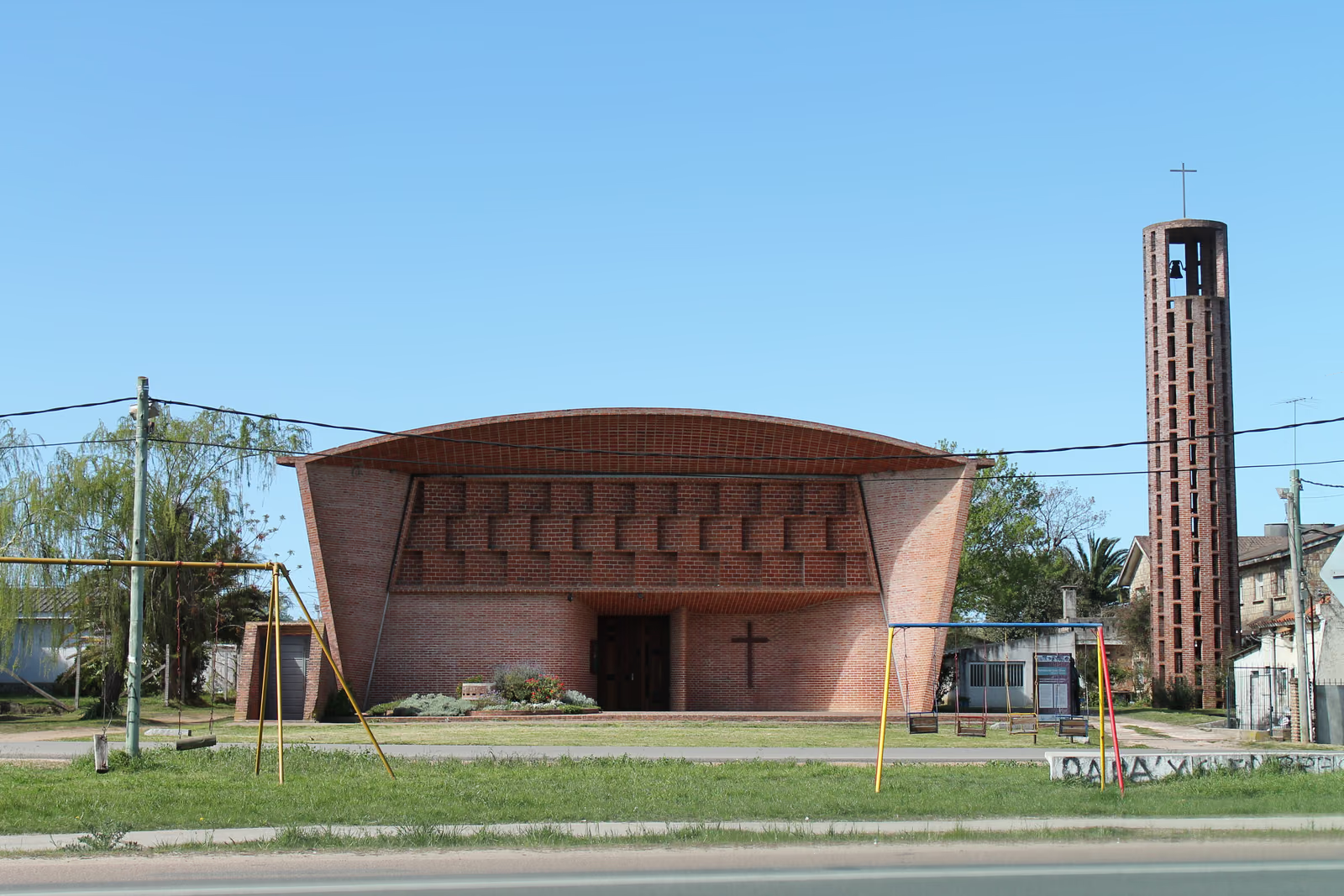
Eladio Dieste trained as a civil engineer in Montevideo and built almost his entire body of work in Uruguay: markets, warehouses, silos, bus stations, factories and a handful of churches. Starting from experiments with reinforced-concrete vaults, he arrived at what he called cerámica armada — thin laminar shells of ordinary fired brick with steel reinforcement laid in the joints, calculated with heavy mathematics and built with local labour and local material. The results roof spans that would normally demand steel, at roughly the cost of a shed. His own argument was economic before it was aesthetic: "a healthy architecture cannot be produced without a rational and economical use of building materials." He was made a doctor honoris causa by the Universidad de la República in 1993, and died in 2000.