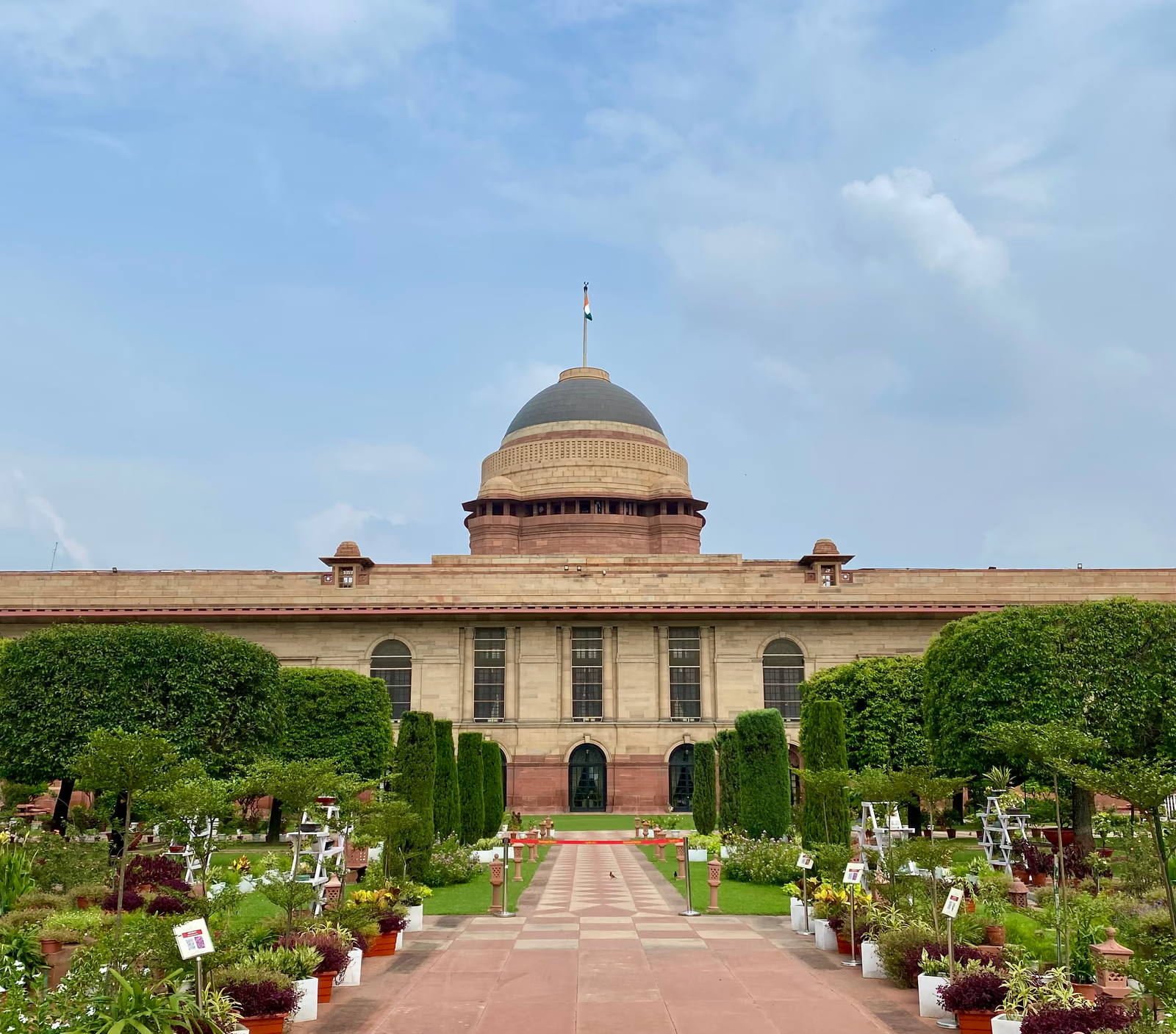
English architect who began in the Surrey vernacular of tile and timber, moved to a rigorous classicism he called “the high game”, and spent twenty years travelling between London and Delhi to build the capital of British India. Lutyens laid out the central administrative precinct of New Delhi with Herbert Baker from 1912 and designed the Viceroy’s House at its head; the two quarrelled bitterly over the gradient of the approach, which Lutyens lost. His invented “Delhi Order” grafted Indian elements — the deep shading chujja, chhatri kiosks, a dome derived from the stupa at Sanchi — onto a classical armature. He is claimed here because New Delhi is the work in question; his London practice may equally place him with the British slice, and the pool should carry only one definition of him.