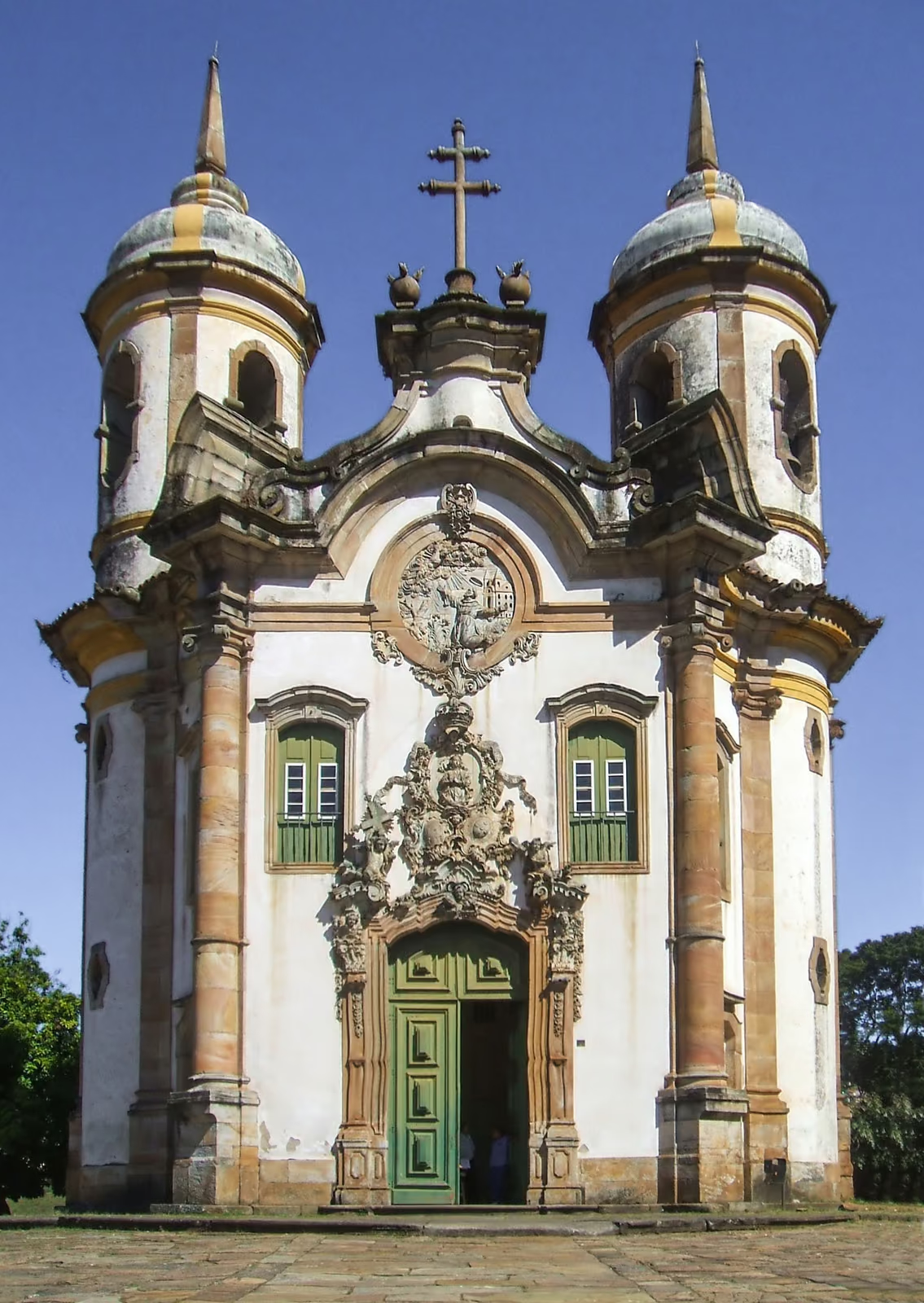
Antônio Francisco Lisboa was born in Ouro Preto around 1738, the son of the Portuguese architect Manuel Francisco Lisboa and an enslaved African woman, and he worked his whole life in the gold towns of Minas Gerais. He designed and carved at once — soapstone portals, pulpits, altarpieces, whole church fronts — and the nickname Aleijadinho, "little cripple", comes from the degenerative illness that deformed his hands in old age. Portuguese Wikipedia is careful to note that most of the four hundred works now attached to his name were attributed by stylistic resemblance rather than by document, and that the earliest substantial biography was written forty-four years after his death; São Francisco de Assis in Ouro Preto is among the securest attributions. His curved fronts, cylindrical towers and overflowing reliefs are the high point of the Brazilian Baroque and Rococo.