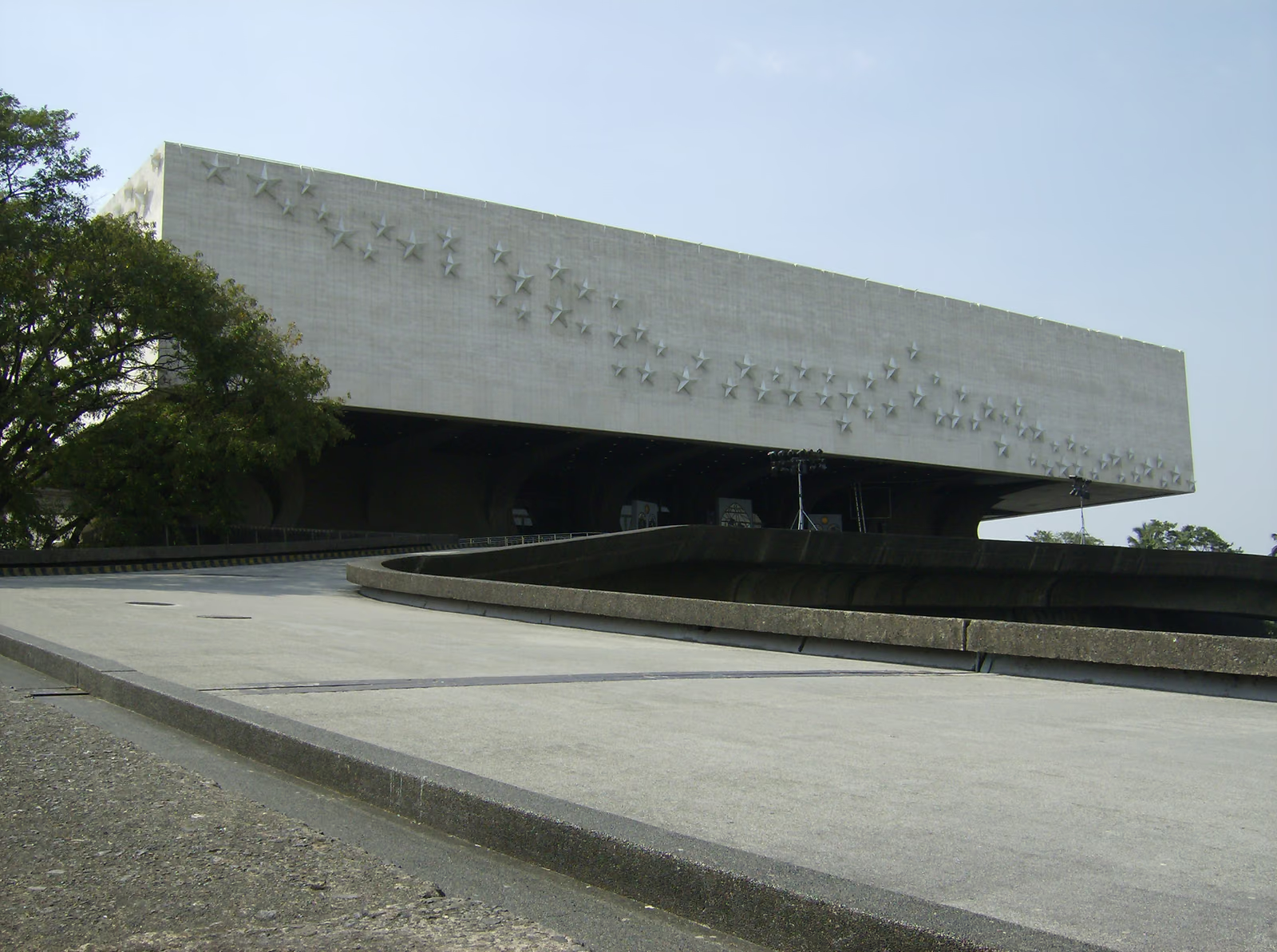
The Cultural Center of the Philippines was created by Executive Order No. 30 of 1966, signed by President Ferdinand Marcos, and its national theatre is the building that made Leandro Locsin’s reputation. Construction began in 1966 with Alfredo Juinio as structural engineer and DM Consunji as builder; it was inaugurated in 1969 as the Theater of Performing Arts. The design grew out of Locsin’s unbuilt Philippine-American Friendship Center, and it is the fullest statement of what he called the floating volume: a travertine-clad box cantilevered clear of its supports on every side, so that a very heavy building reads as though it were lifted off the ground — a move he connected to the raised bahay kubo. Under Republic Act No. 10066, works by National Artists carry a presumption of status as Important Cultural Property. It remains the flagship venue of the CCP.
The Cultural Center was established by executive order of President Ferdinand Marcos in 1966 and its construction and programme were driven by Imelda Marcos, who chaired the centre; the complex became the template for a series of state cultural projects of the Marcos period. Senator Ninoy Aquino objected on the Senate floor to public funding for the project without congressional appropriation, calling it an institution for the elite and arguing "you do not develop culture by putting up a 50-million building on the bay." Construction costs rose to nearly ₱50 million against an original ₱15 million estimate, and the project has been cited, alongside others of the period, as symptomatic of what critics called Imelda Marcos's "edifice complex," undertaken amid widespread poverty. The building was inaugurated in 1969, before the declaration of martial law in 1972. It is a government-owned and controlled corporation and receives an annual state subsidy, and it is now placed under the National Commission for Culture and the Arts for policy coordination.
Wikidata Q30590055 · Commons: CULTURAL CENTER OF THE PHILIPPINES MAIN BUILDING 3 - Flickr.jpg · Photo: Michael Francis McCarthy · Licence: CC BY 2.0