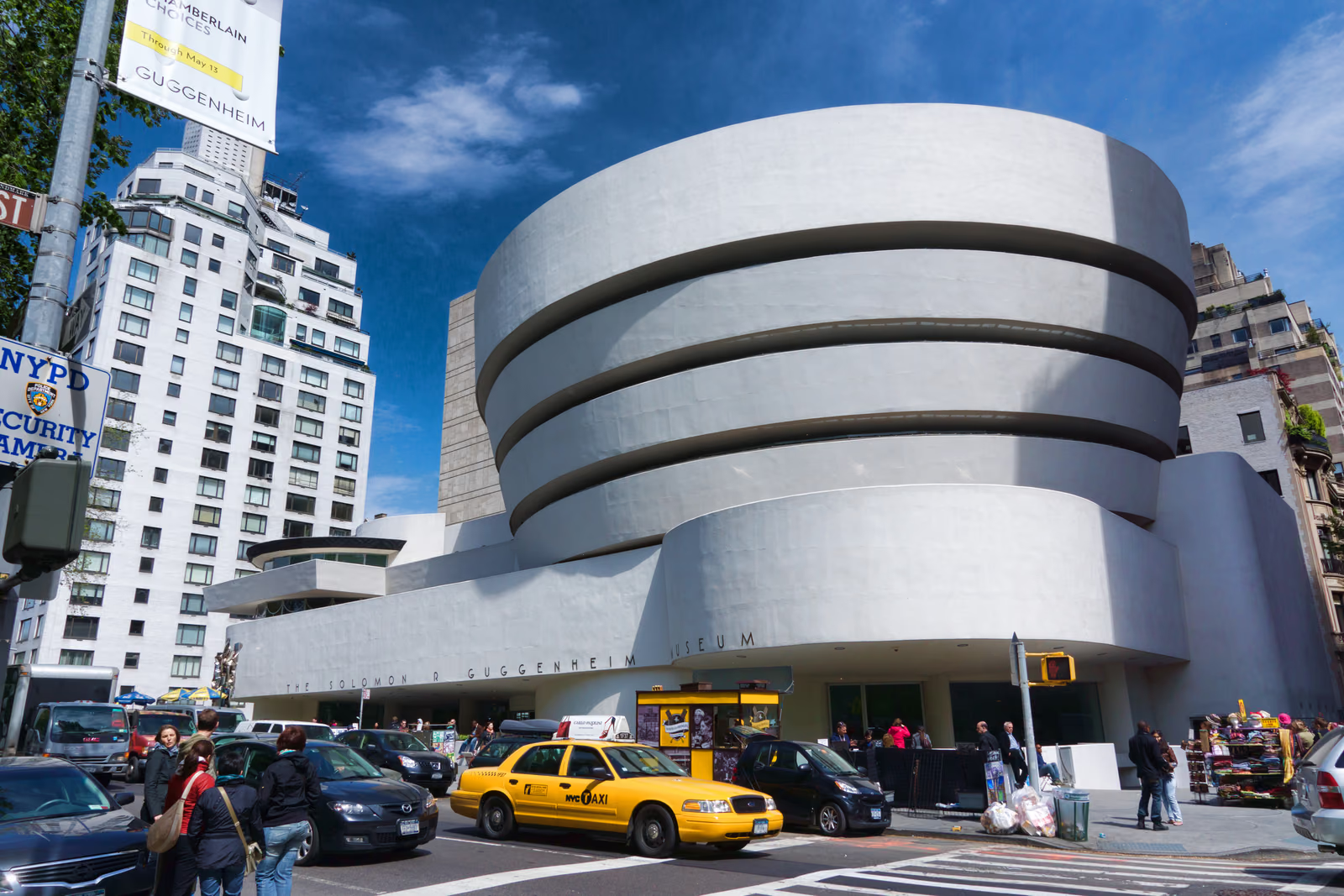
Wright took the commission in June 1943 and spent fifteen years on it, some seven hundred sketches and six sets of working drawings, dying six months before it opened. The idea never changed: one continuous ramp winding up the inside of a drum that widens as it rises, lit from a glazed dome. Visitors were to ride to the top and walk down, so that the pictures arrived as an uninterrupted sequence with the whole void always open beside them. Painters objected before a wall was hung — a curved, sloping, low surface is a hostile place for a rectangle — and twenty-one artists signed a round-robin protest letter arguing the sloped ramp would throw their canvases askew and leave no level baseboard for reference. Wright was unmoved, and the building has outlasted the argument. The ramp is structural as well as circulatory, acting as an arch that braces the outer wall. It became a National Historic Landmark in 2008 and part of a UNESCO World Heritage inscription of eight Wright buildings in 2019.
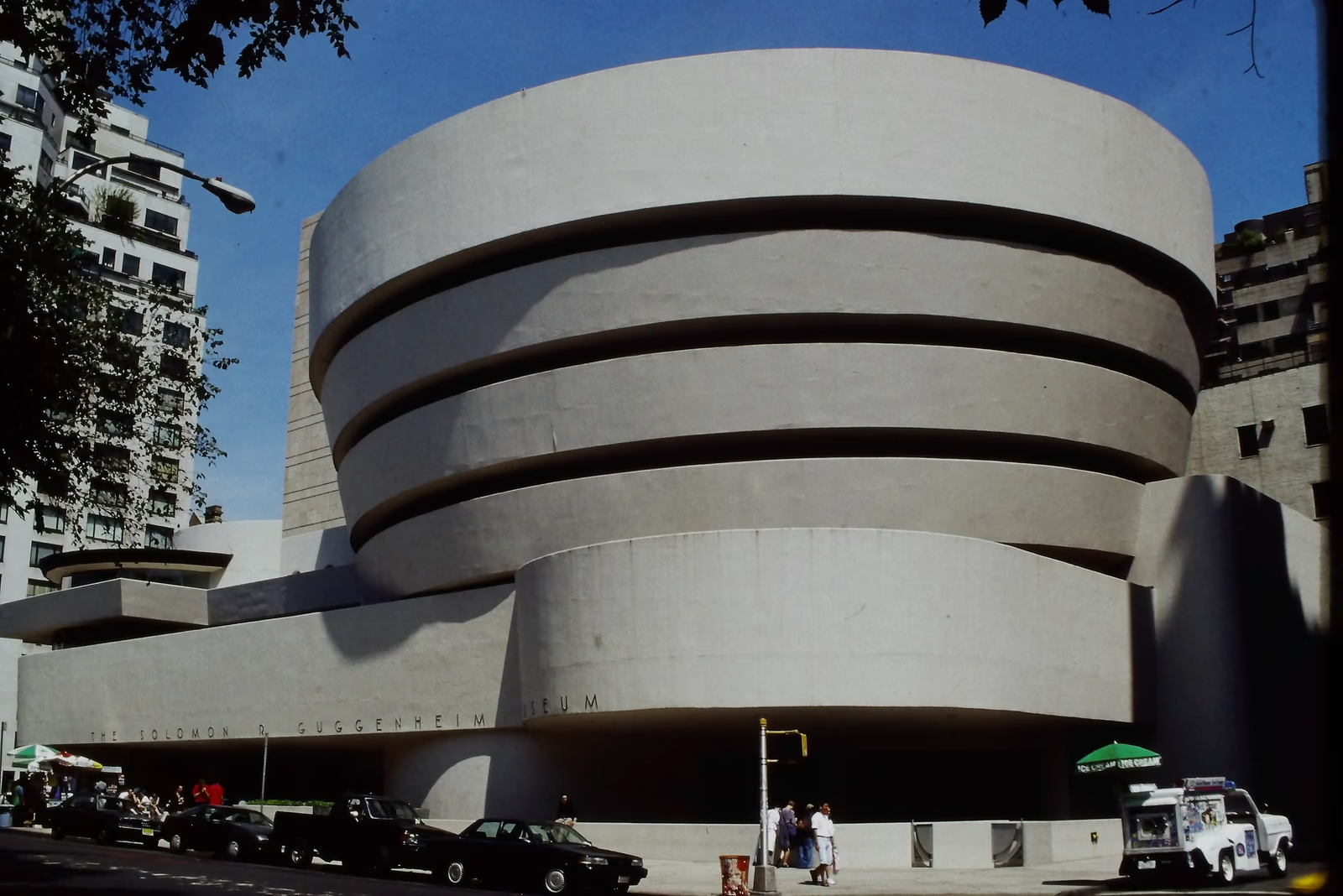
Wikidata Q201469 · Commons: File:NYC - Guggenheim Museum.jpg · Photo: Jean-Christophe BENOIST · Licence: CC BY 3.0