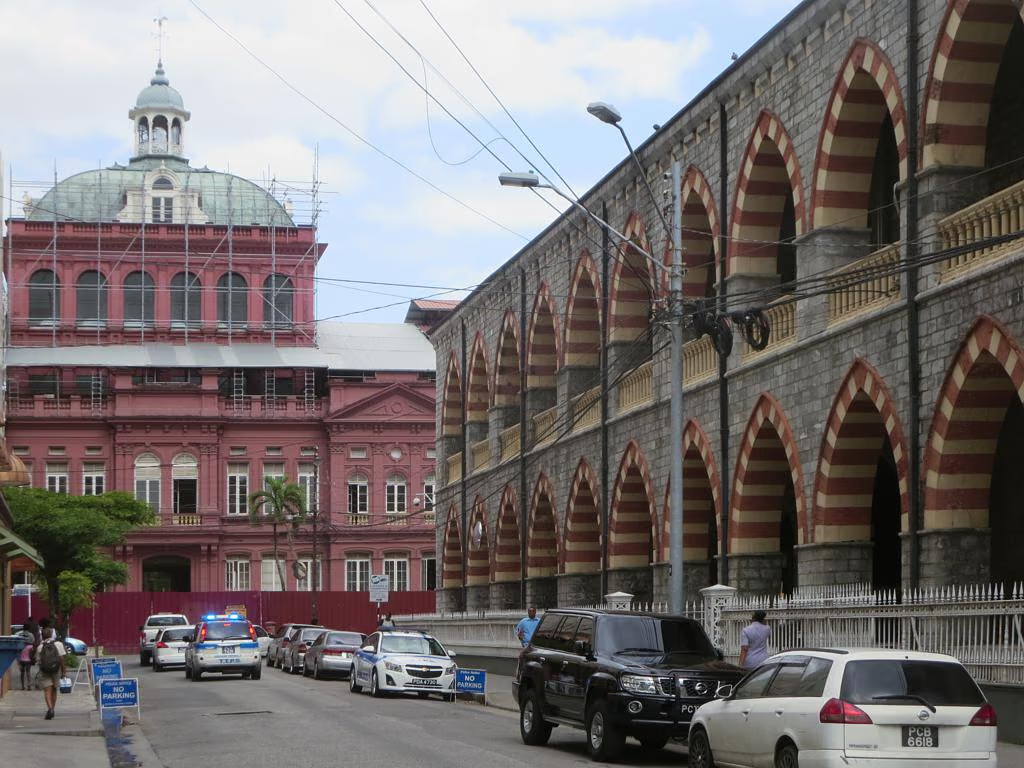
The original Red House of 1844 stood only until the Water Riots of 23 March 1903, when a crowd protesting a new water ordinance burned it to the ground. Daniel Hahn, chief draughtsman of the colonial Public Works Department, rebuilt it in a Beaux-Arts idiom of dressed stone, reopening on 4 February 1907 with a high central cupola — the Rotunda — that gives the building its silhouette across Woodford Square. Purpleheart timber columns and entablature, fustic panelling and a Legislative Council ceiling in Wedgwood-blue gesso by the English firm Jackson & Sons furnish the two principal chambers. Named, by tradition, for the red paint it wore for a royal visit, it has functioned since 1962 as the seat of an independent Trinidad and Tobago's Parliament. On 27 July 1990 members of the Jamaat al Muslimeen stormed the building and held the Prime Minister and Cabinet hostage for five days in an attempted coup that left 24 people dead before the insurgents surrendered.
On 27 July 1990, some 114 members of the Jamaat al Muslimeen, led by Yasin Abu Bakr, stormed the Red House and the state broadcaster in an attempted coup, holding Prime Minister A.N.R. Robinson and most of his Cabinet hostage inside the building for five days while parts of Port of Spain burned in the accompanying unrest. Robinson was shot in the leg; 24 people died before the insurgents surrendered on 1 August 1990 under an amnesty later upheld by the Privy Council. The building itself sustained fire and structural damage that fed into a restoration completed decades later.
Wikidata Q7759880 · Commons: Red House of Trinidad and Tobago.jpg · Photo: David Stanley · Licence: CC BY 3.0