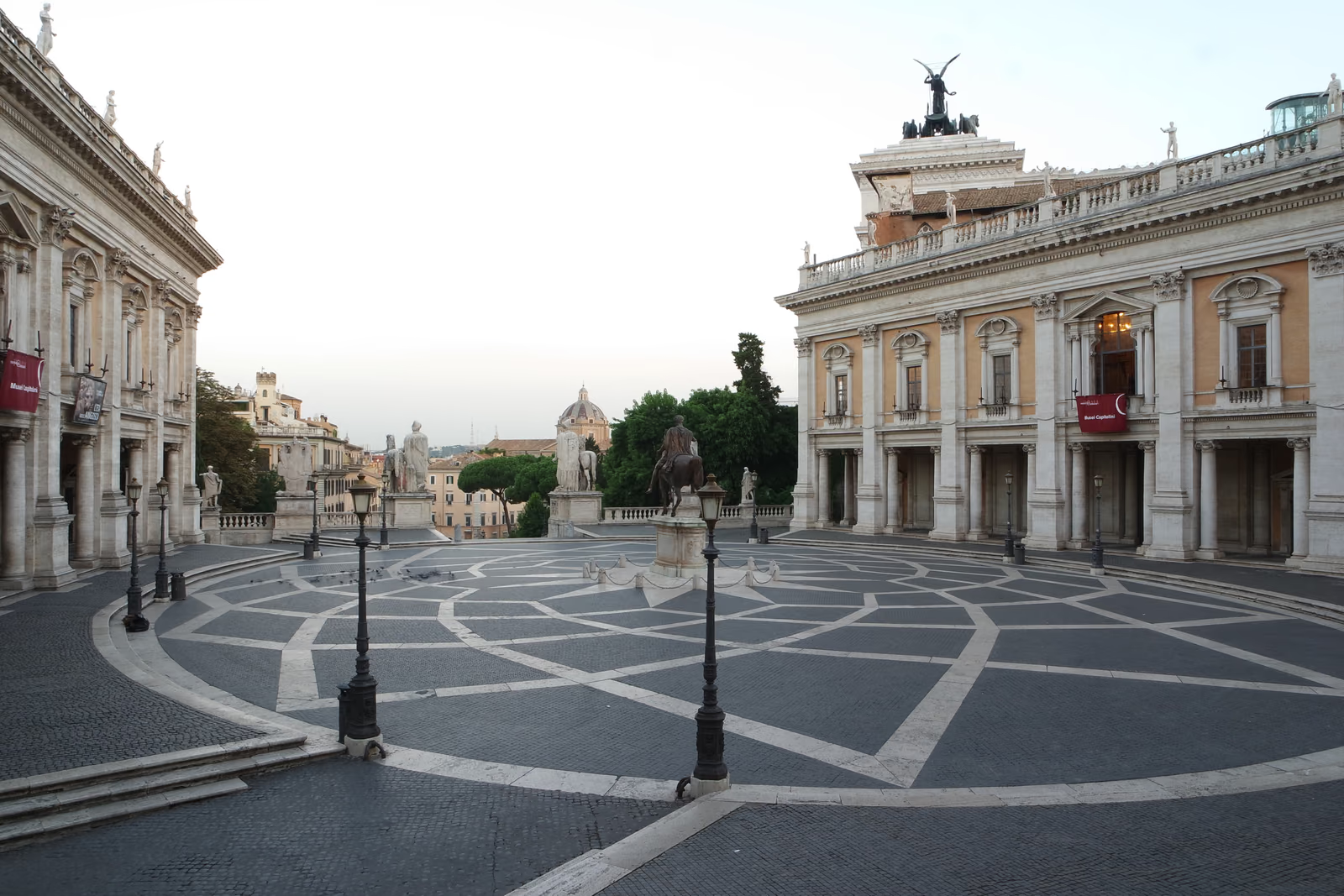
Pope Paul III commissioned Michelangelo to remake the summit of the Capitoline Hill in 1536, ahead of a state visit by Emperor Charles V, and the design that resulted turned Rome's ancient seat of government to face the wrong way: away from the Forum, toward St Peter's, across a trapezoidal piazza framed by three palace facades. Michelangelo gave the existing medieval Palazzo Senatorio a giant order of pilasters and a double stair, and had a matching Palazzo dei Conservatori rebuilt opposite an identical Palazzo Nuovo he planned but never saw begun; construction continued long past his death in 1564, the second palace not finished until 1654. His oval pavement, a twelve-pointed star radiating from an ancient equestrian statue of Marcus Aurelius, survives only as a drawing and an engraving by Étienne Dupérac; it was not actually laid until 1940, under Mussolini, three and a half centuries after Michelangelo drew it. The piazza today is Rome's city hall and the entrance to the Capitoline Museums.
Wikidata Q34921 · Commons: File:Piazza del Campidoglio 2015.jpg · Photo: Kameister · Licence: CC BY-SA 4.0