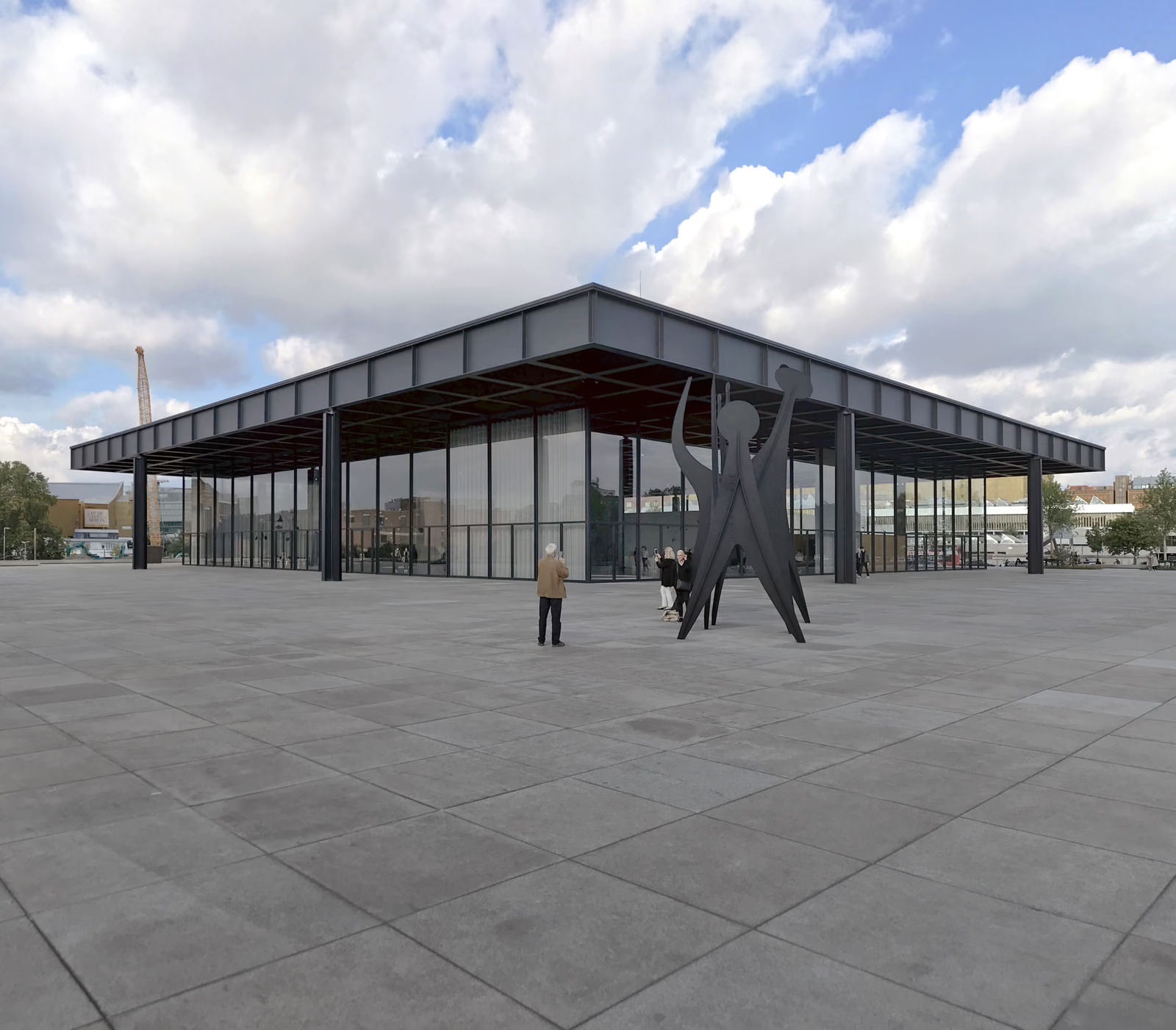
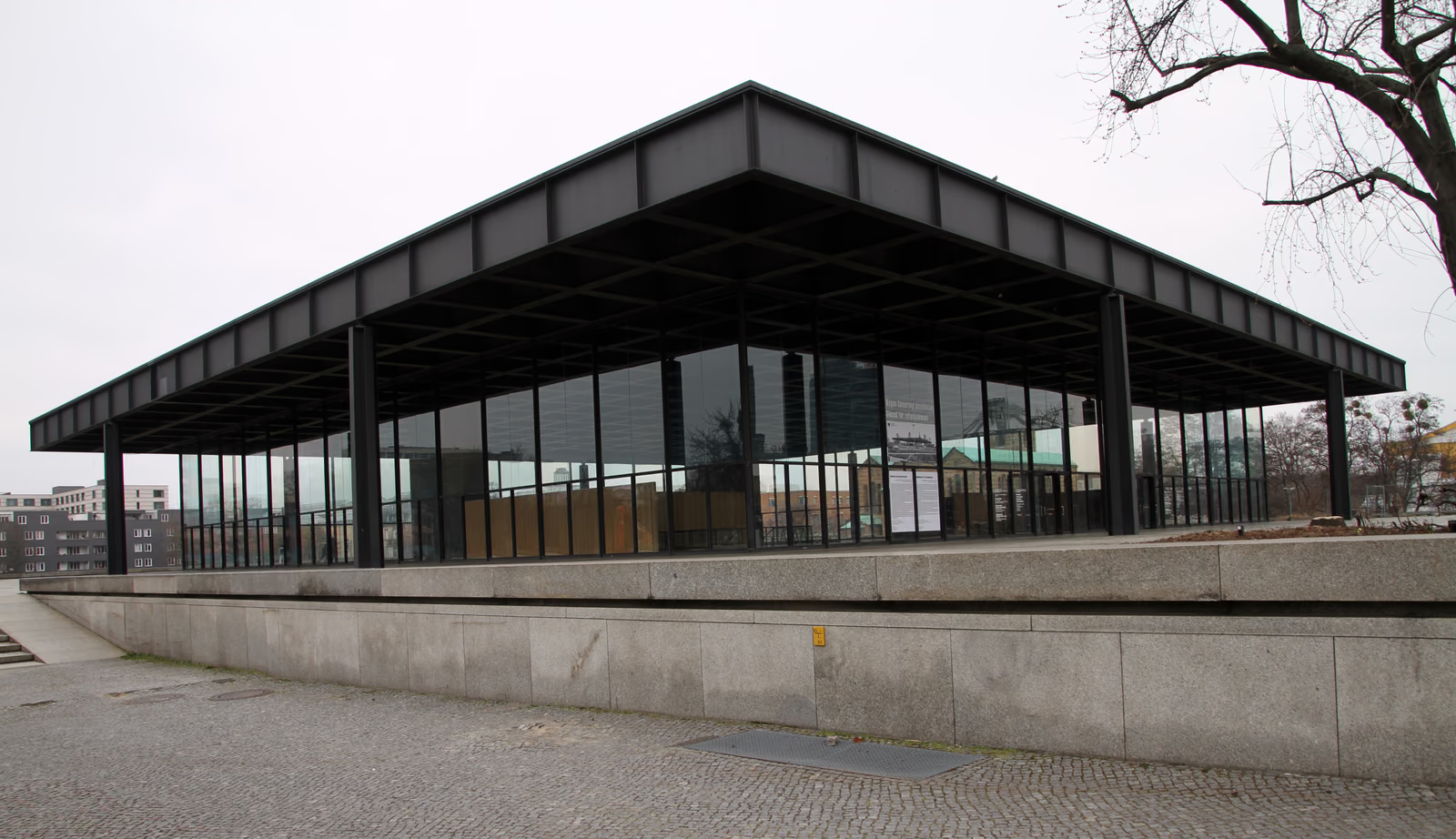
Mies was seventy-six when the commission arrived in 1962, and he answered it with a design he had already made twice and never built: the unrealised Bacardi headquarters for Santiago de Cuba of 1957 and the Georg Schäfer museum for Schweinfurt of 1960–63, both a roof on eight columns over an interior without supports. He asked his friend Frei Otto to help with the statics of the 1,260-tonne roof, and Otto replaced the four central piers with two on each side. The pavilion sits on a granite terrace 105 by 110 metres that takes up the fall towards the Landwehrkanal; the glass walls are set back 7.2 metres on every side, so the roof reads as a free plate. It was assembled at working height on the plinth and lifted by twenty-four synchronised jacks. Construction began on 23 September 1965 and finished in 1968, a year before Mies died.
Wikidata Q130608380 · Commons: File:2021-09-01-Neue-Nationalgalerie-2021-b.jpg · Photo: Gunnar Klack · Licence: CC BY-SA 4.0