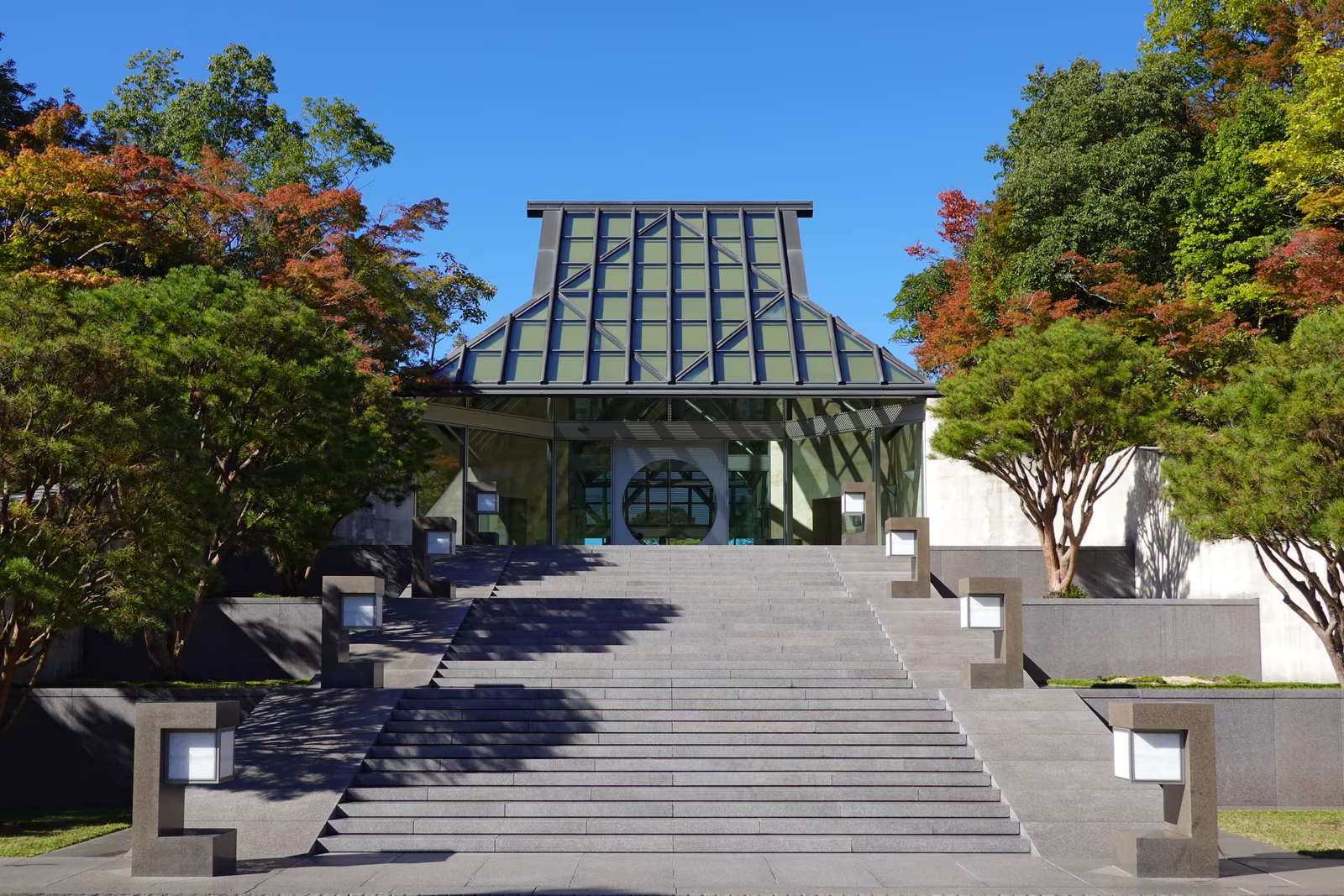
Local building codes on the Shigaraki mountainside where the Koyama sisters wanted their collection housed effectively forbade a conventional building, so Pei buried most of it: roughly eighty per cent of the museum's volume sits inside the ridge, and the excavated hillside was replanted after construction so that from a distance almost nothing is visible but a glass roofline among the pines. Pei told the sisters he had in mind the Chinese poet Tao Yuanming's "Peach Blossom Spring," in which a fisherman finds a hidden utopia by following a stream through a narrow, dark passage that suddenly opens onto light; visitors reach the museum the same way, on an electric cart or on foot along a curving tunnel bored through the mountain, over a cable-stayed bridge, and into a glazed steel-trussed hall clad inside in the same French limestone Pei had used at the Louvre. The geometric roof, triangulated glass over a repeating diamond lattice, is the one part of the building Pei allowed to declare itself; everything else is landscape first. It opened in 1997 and now holds nine Japanese Important Cultural Properties.
Wikidata Q1268542 · Commons: File:241119 MIHO MUSEUM Koga Shiga pref Japan08s3.jpg · Photo: 663highland · Licence: CC BY-SA 4.0