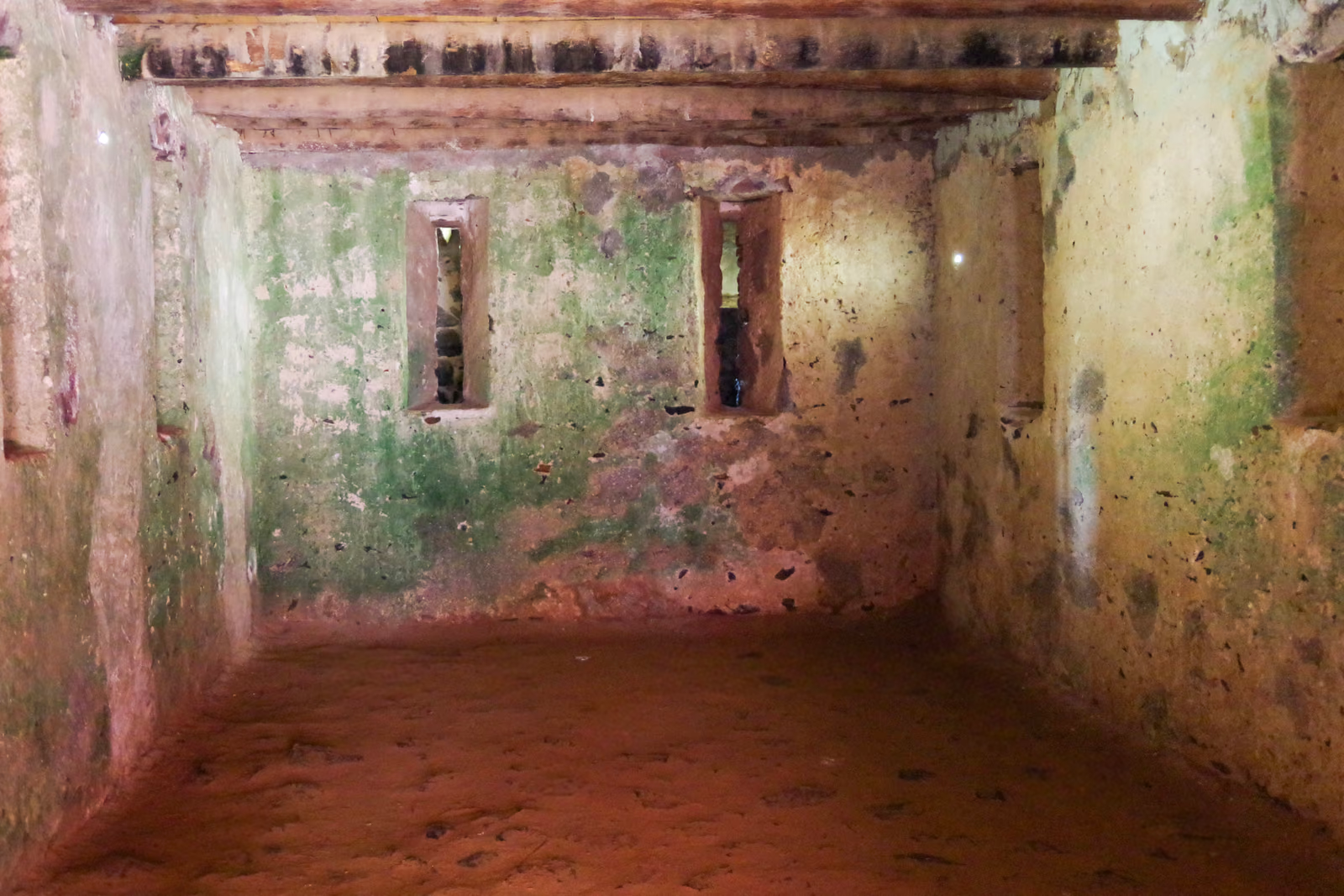
The house on rue Saint-Germain was built between about 1776 and 1786 by Nicolas Pépin, son of the signare Catherine Baudet and brother of Anne Pépin. It is an ordinary Gorée type made extraordinary by what it came to stand for: a two-storey masonry block whose twin curved stairs sweep up to the merchant's floor while the ground level is given over to low cells and a seaward opening now known as the Door of No Return. The plan separates the family's rooms from the held people beneath as a matter of construction, not of retrospective symbolism. Since 1962 it has been a museum, and it is the best-known memorial to the Atlantic slave trade anywhere in Africa. How much of the trade actually passed through this particular house is disputed by historians, and the dispute is set out in the context note below.
The Pépin family owned ships and took part in the Atlantic slave trade; the house was used to hold enslaved people before export, and accounts describe them shackled in dark, airless cells, families separated by sex and age. The scale is contested. Philip D. Curtin's 1969 statistics record enforced transports from Gorée from about 1670 to 1810 at no more than 200 to 300 a year, and argue the doorway itself was built too late to matter; Ana Lucia Araujo has said plainly that it is not the place from which people left in the numbers claimed. Boubacar Joseph Ndiaye, the museum's curator from 1962 to 2009, maintained the opposite, and a 1998 African historical conference cited Nantes records of 103,000 people — a figure later shown to describe Upper Guinea as a whole rather than Gorée. Historians who dispute the numbers still hold the island to be a legitimate memorial to a trade carried on at greater scale from ports in present-day Ghana and Benin.
Wikidata Q691908 · Commons: File:Gorée 2024 - Maison des esclaves - 08.jpg · Photo: Fawaz.tairou · Licence: CC BY 4.0