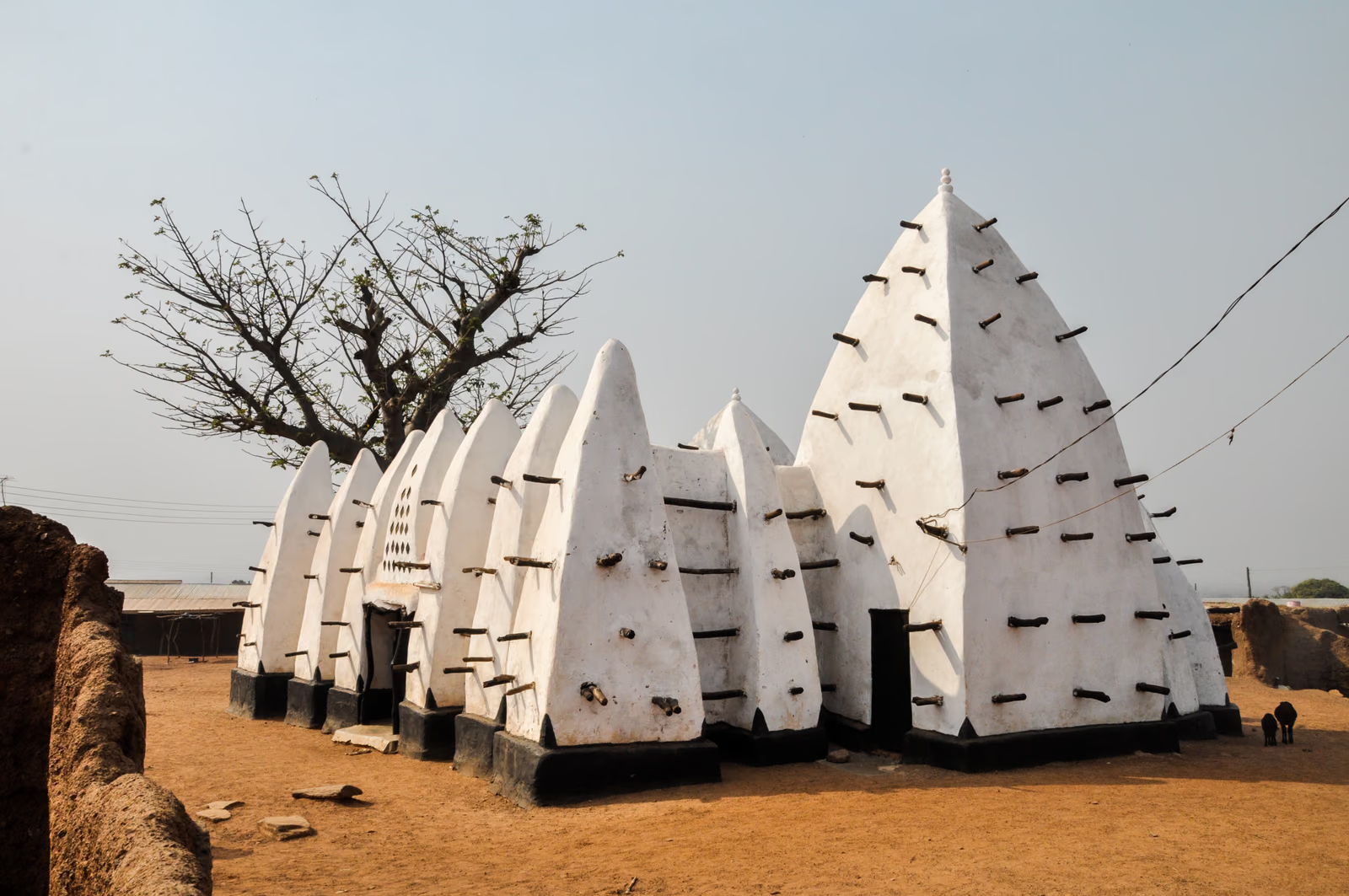
The mosque at Larabanga, in the West Gonja district of northern Ghana, is dated by local tradition to 1421, which would make it the oldest mosque in the country and among the oldest in West Africa; the date rests on oral tradition rather than an inscription or excavation, and should be read as such. The story told locally credits an Islamic trader named Ayuba, who is said to have dreamed, while resting near a stone still venerated nearby, that he was instructed to build a mosque on the spot; he woke to find the foundations already laid and completed the building himself. Whatever its origin, the structure that stands today is a small, single-room prayer hall roughly eight metres square, built in wattle and daub in the Sudano-Sahelian manner shared with Djenné and Zaria: two pyramidal towers flank the mihrab and minaret, and twelve conical buttresses reinforced with projecting timber ring the walls. Ayuba is said to be buried beside the mosque, under a baobab planted to mark the grave. The building has been restored repeatedly, most recently in 2023, and remains an active mosque and pilgrimage site.
Wikidata Q490898 · Commons: File:Larabanga_Mosque.jpg · Photo: Sathyan Velumani · Licence: CC BY-SA 3.0