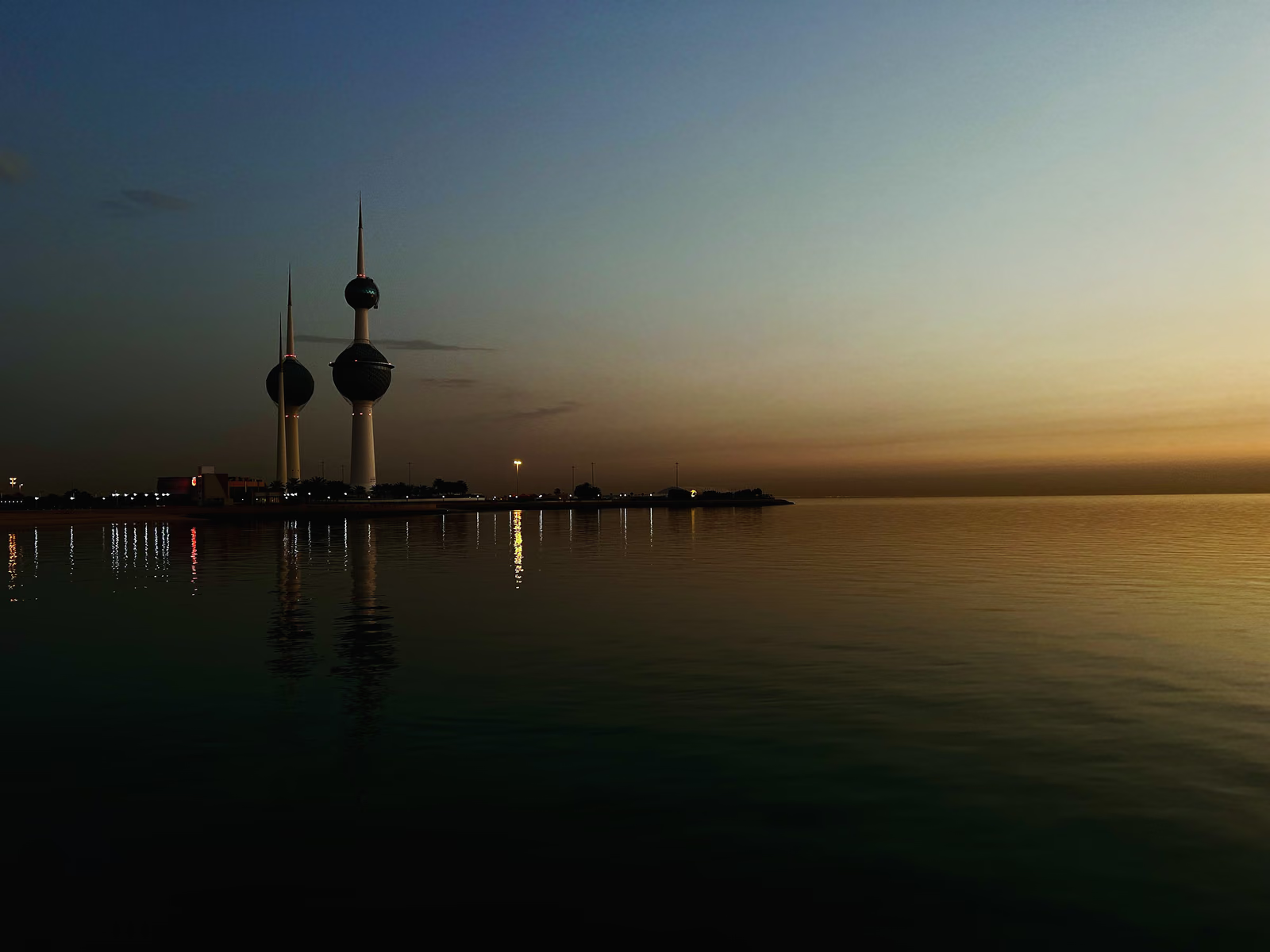
The Kuwait Towers began as plumbing. The Swedish firm VBB was building the water supply of a country transformed by oil, and its chief architect Sune Lindström had already put up five groups of blunt mushroom-headed reservoirs when the Emir asked for something better at the sixth site. Lindström's wife, the Danish designer Malene Bjørn, produced ten schemes; three went to the ruler and one was built between 1971 and 1976. Three concrete shafts rise from a reclaimed headland, two of them pierced by spheres skinned in some forty-one thousand enamelled steel discs in eight blues, greens and greys, spiralled in a pattern that recalls a tiled dome. The lower sphere holds a tank and a restaurant; the upper one turns. A water tower became the emblem on the currency.
The towers were heavily damaged by Iraqi forces during the occupation of Kuwait from August 1990 to February 1991, and were structurally surveyed and repaired after liberation. They closed again for maintenance from March 2012 and reopened on 8 March 2016. The Kuwait water-tower programme of which they form the sixth and final group, credited to Sune Lindström, Malene Bjørn and VBB, was among the first recipients of the Aga Khan Award for Architecture in 1980.
Wikidata Q1335640 · Commons: File:Kuwait tower at dusk.jpg · Photo: Samarstha45 · Licence: CC BY-SA 4.0