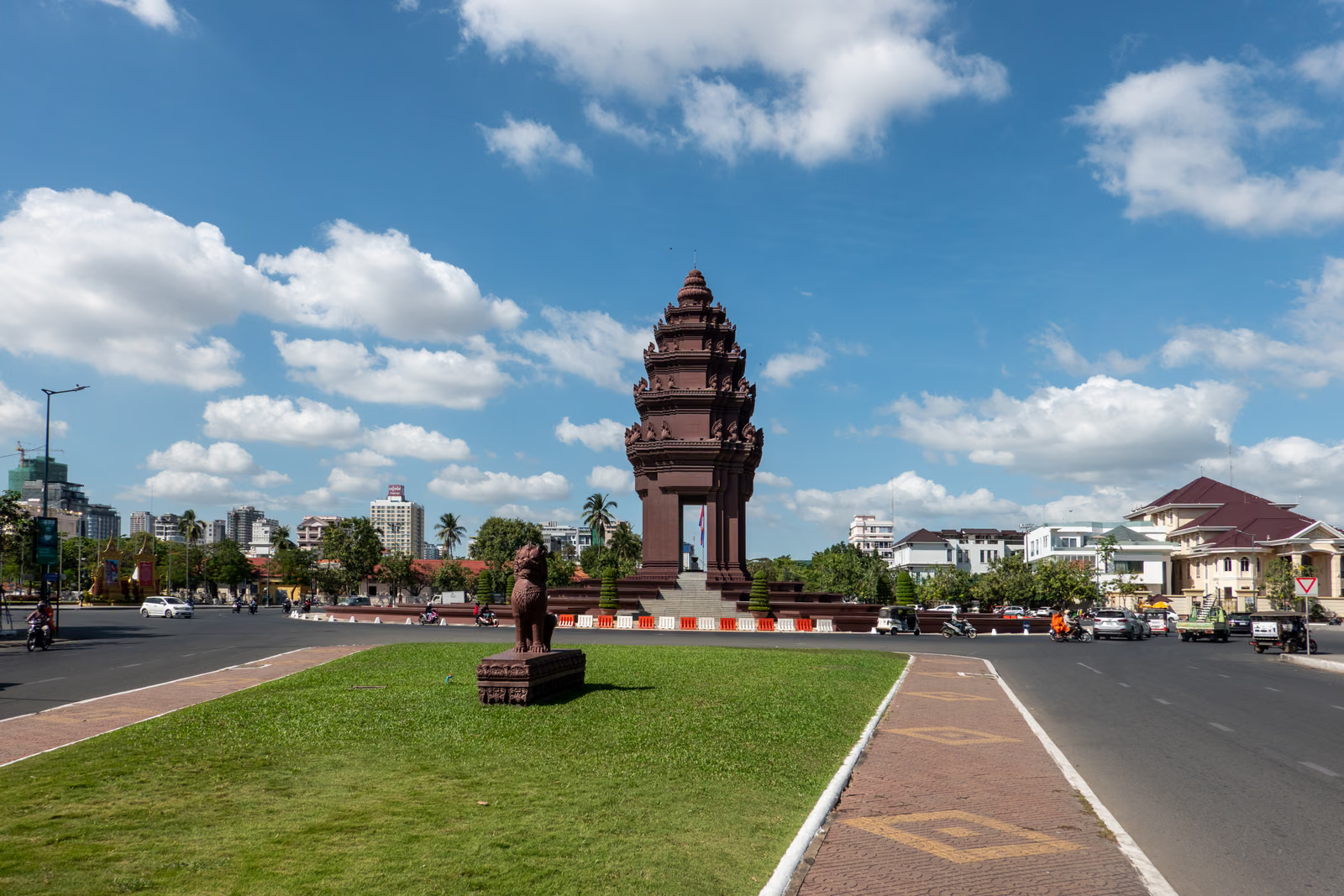
Cambodia's independence from France in November 1953 had no monument until Norodom Sihanouk personally commissioned one from Vann Molyvann, newly returned from six years of architectural training in Paris under, among others, Le Corbusier. Molyvann set a reinforced-concrete tower of five receding tiers at the centre of a traffic circle on Phnom Penh's Boulevard Norodom, its outline drawn from the lotus-bud finials and radiating naga hoods of Angkorian temple towers, most directly the tenth-century sanctuary at Banteay Srei, translated whole into modern construction rather than quoted in decoration. It stands 37 metres over a stepped base used for public assembly and was completed in 1962, after four years of work. On national holidays a flame is lit at its base by a member of the royal family or a senior official, and floral tributes are laid on its steps. It is the founding built statement of what architectural historians call New Khmer Architecture, Molyvann's synthesis of modernist construction with historic Khmer form, made before the civil war and Khmer Rouge years drove him into a second, twenty-one-year exile.
Wikidata Q1108673 · Commons: File:02-Independence Monument Phnom Penh-nX-3.jpg · Photo: PsamatheM · Licence: CC BY-SA 4.0