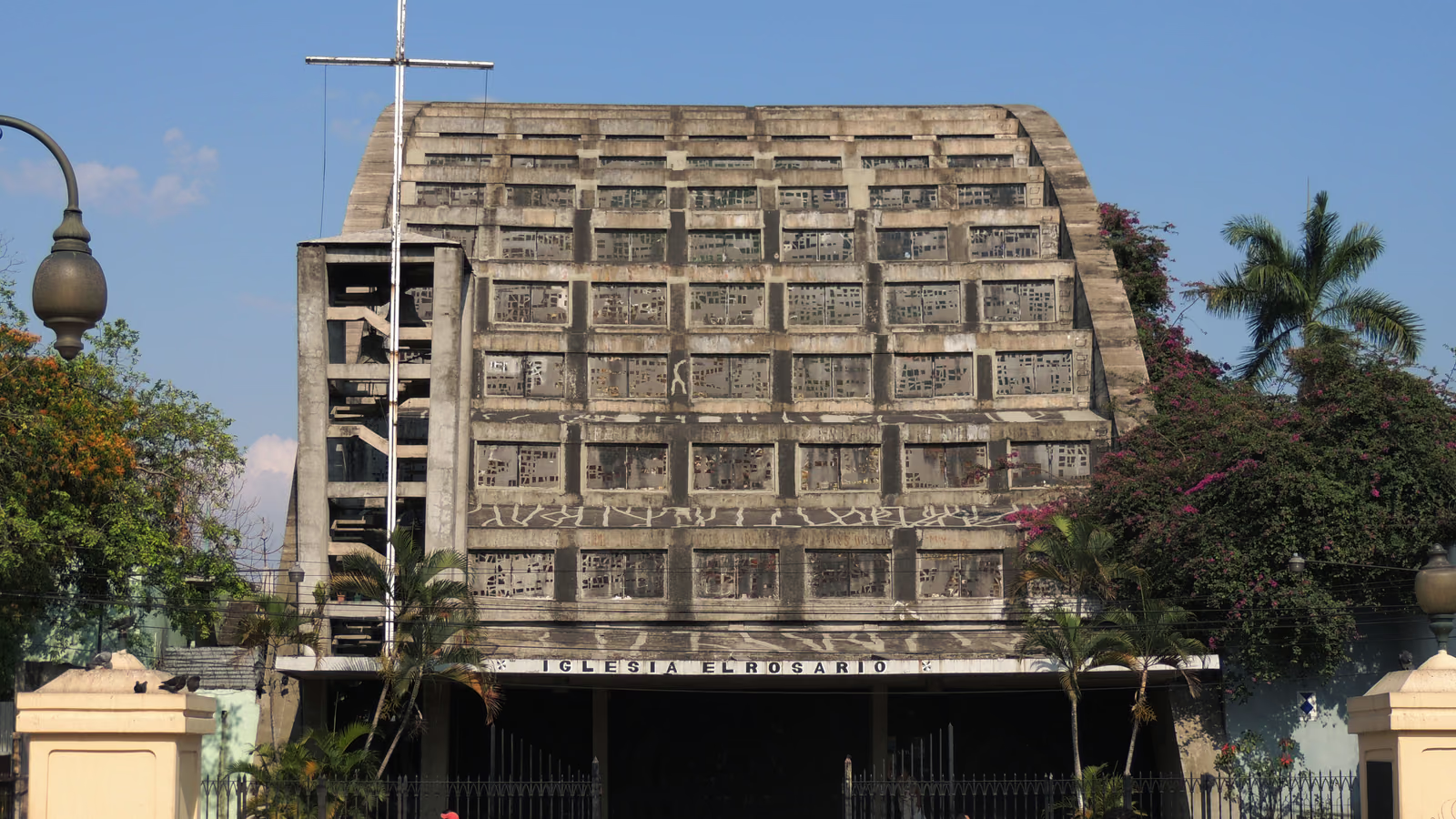
In 1962 the Dominican friar Alejandro Peinador asked the architect and sculptor Rubén Martínez Bulnes to replace the wooden parish church standing on the site of San Salvador's original parish, later its first cathedral. Martínez broke deliberately with the Latin- and Greek-cross plans customary in the city: a single unpillared nave, arched like a folded wing, puts every worshipper in sight of the altar, answering the Second Vatican Council's call for a church that faces the people rather than fleeing from God, in his own words. Local church authorities balked at the plans; approval came instead from the Vatican. Construction ran from 1964 to June 1971. The exposed-concrete walls are perforated by a grid of deep coffers that the Spanish Dominican Domingo Iturgaiz filled with fragments of coloured glass set directly into cement, and a Way of the Cross in black iron over concrete and pumice ends at a spiralling risen Christ. The church holds the remains of the priest José Matías Delgado, a leader of Central American independence. It was declared a Historic Site of the Republic in 1972 and a Cultural Property of El Salvador in 2015.
Wikidata Q42808859 · Commons: File:Iglesia El Rosario, San Salvador.JPG · Photo: BelenM · Licence: CC BY-SA 3.0