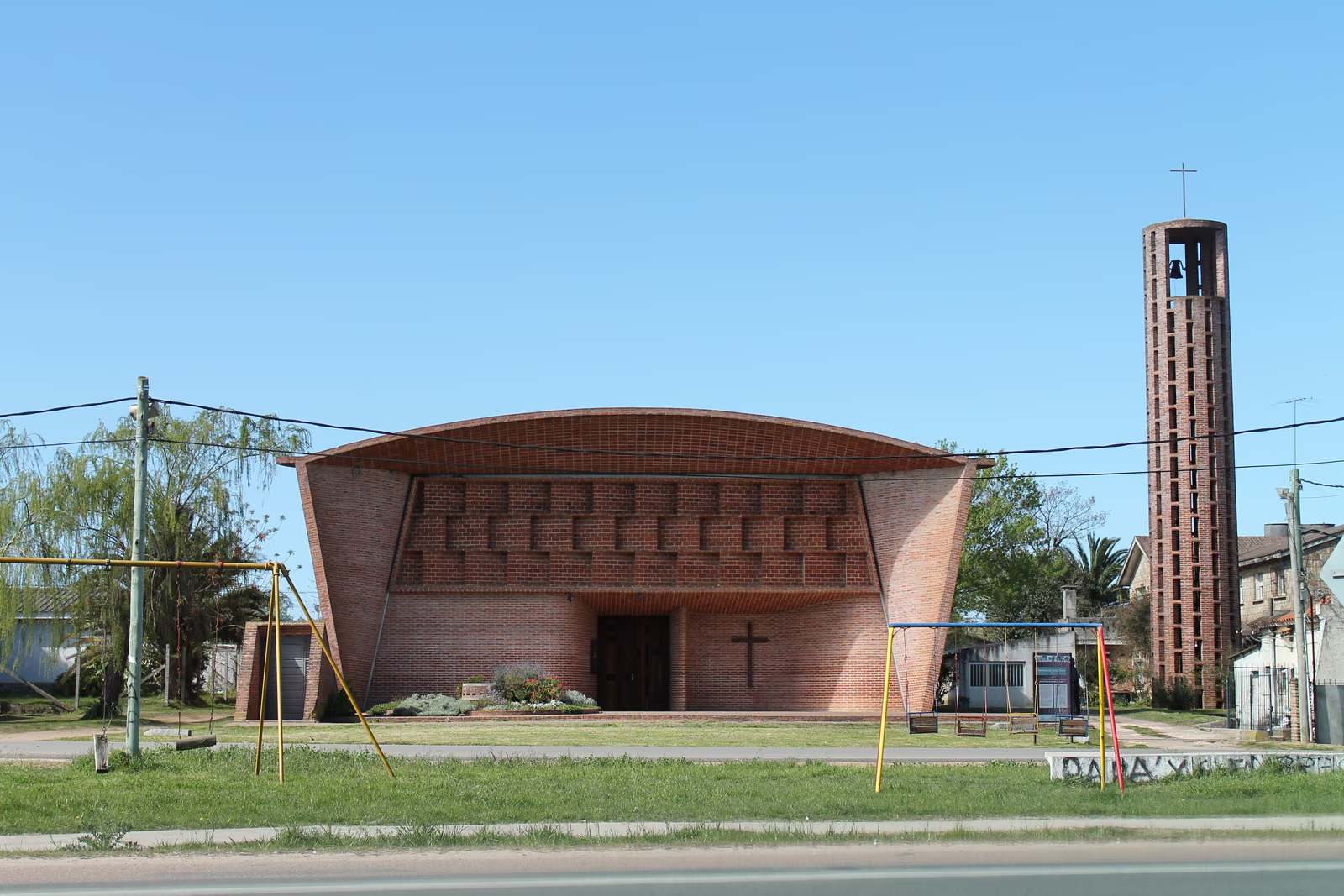
Eladio Dieste drew this church in 1952 and it was built in 1959, erected in 1960. Everything about it is brick. The side walls start straight at the ground and bend into double curvature as they rise seven metres, so that the wall stiffens itself; the roof is a gaussian vault that ripples along its length, and the two are continuous. There is no column and no beam anywhere in the building, and the whole fabric is fired brick with steel reinforcement laid in the joints — the technique Dieste named cerámica armada, by analogy with reinforced concrete. It cost roughly what a shed costs. Dieste was explicit that the parish it served was not the seaside resort but the settled town behind it: "one of those shapeless groupings that never quite become a village", as he wrote, "a town of workers and farmhands who supply the resort with lettuces, bricklayers and serving girls." UNESCO inscribed it in 2021.
Wikidata Q26721344 · Commons: Iglesia Cristo Obrero y Nuestra Señora de Lourdes.JPG · Photo: María Beatriz Rodriguez · Licence: CC BY-SA 3.0