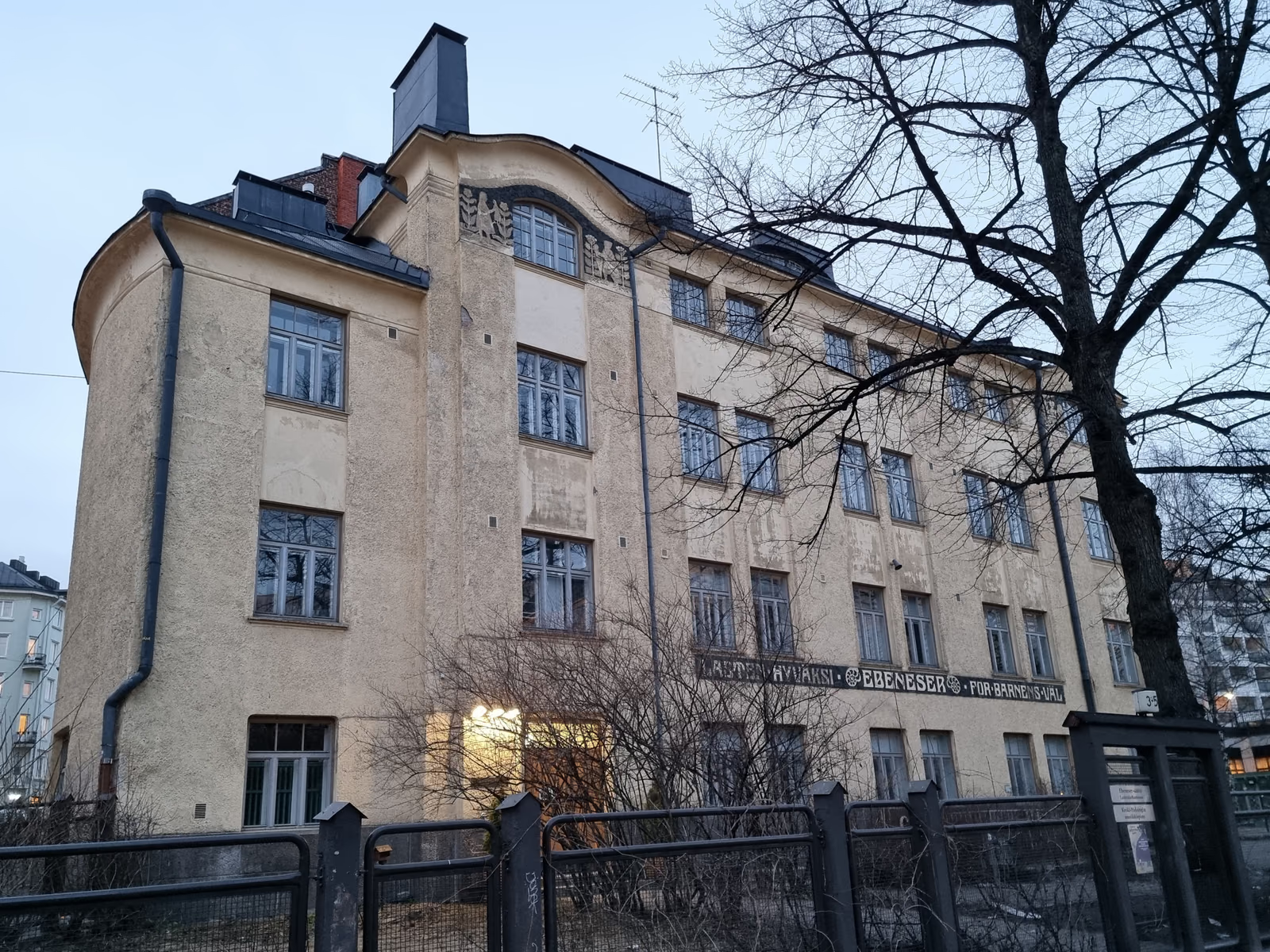
Hanna Rothman and Elisabeth Alander opened a people's kindergarten in the working-class district of Sörnäinen in 1890; by 1900 it had outgrown its rooms and an association was formed to build it a house. Wivi Lönn — the first woman in Finland to practise architecture from her own office — drew the design in 1906 and the building opened in 1908 as one of the first purpose-built kindergartens in the country. Lönn set out to avoid anything that looked like an institution: daylight from several sides, warm materials, rooms scaled to small children rather than to corridors. The Jugend front announces the purpose in words, a carved band reading "Lasten hyväksi – Ebeneser – För barnens väl" ("for the good of children"), wound with a spiral shell motif and set above a relief of children at play. It housed Finland's only kindergarten-teacher seminary until 1955.
Wikidata Q55146352 · Commons: Ebeneser House in Harju, Helsinki, Finland, 2021 - 02.jpg · Photo: Coen · Licence: CC BY-SA 4.0