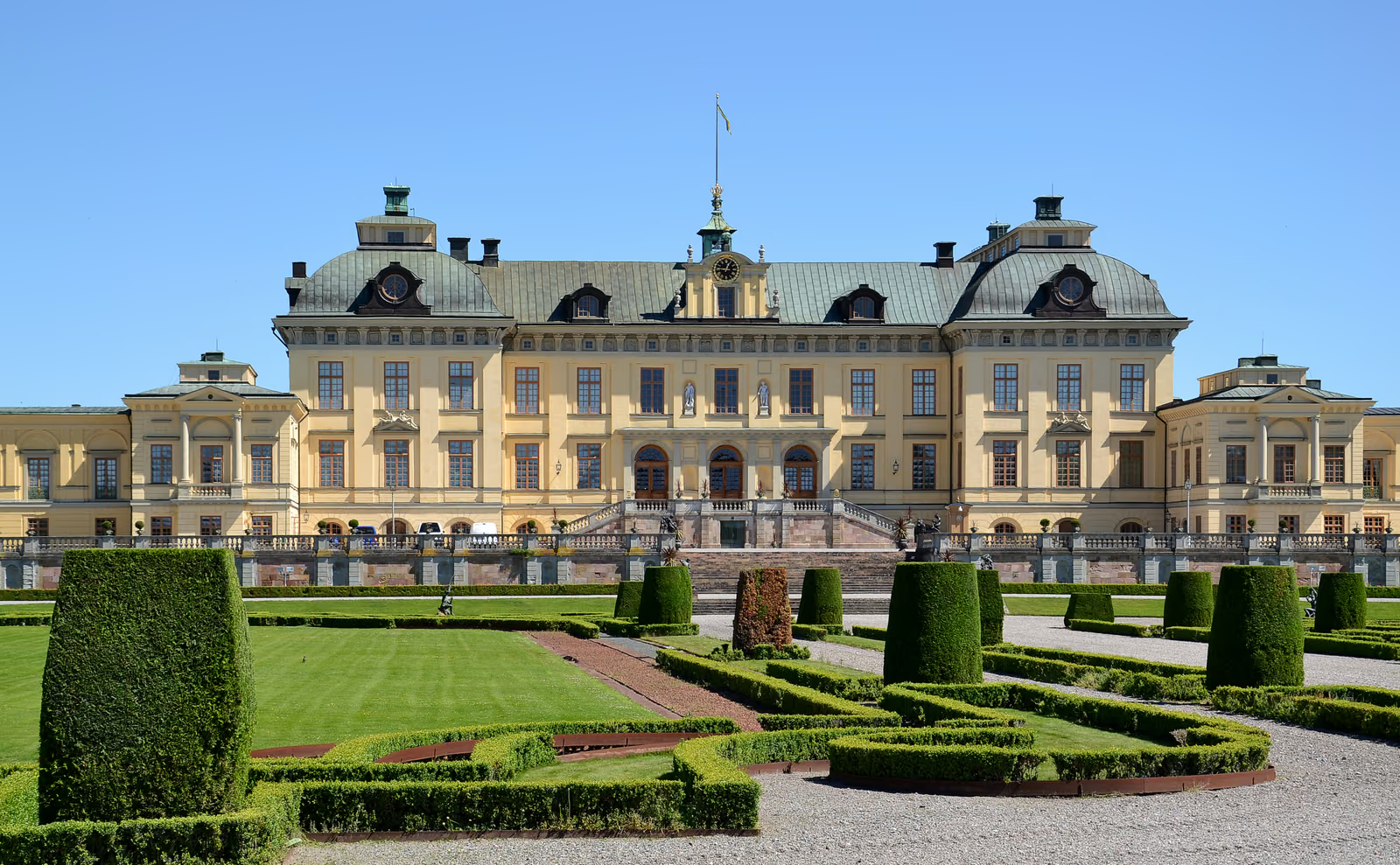
The queen dowager Hedwig Eleonora bought the older palace on Lovön during 1661 and it burned to the ground on 30 December that same year. She engaged Nicodemus Tessin the Elder, and work on the replacement began in 1662 — a deliberate act of state architecture by a woman who, as head of the regency for the under-age Charles XI, was effectively ruling a country that had just become a European power. Tessin gave her a long, low, pale-rendered block with corner pavilions, more French in discipline than Italian in rhetoric, opening onto a Baroque garden that runs away from the house in a single axis. He died in 1681 with the shell essentially complete; his son Nicodemus Tessin the Younger finished the interiors, including the great staircase with Nicolaes Millich's marble muses. Later queens re-decorated in Rococo, and Louisa Ulrika had the court theatre rebuilt in grand style after the earlier one burned in 1762. UNESCO inscribed the whole domain in 1991.
Wikidata Q208559 · Commons: Drottningholm Palace (by Pudelek) 3.jpg · Photo: Pudelek · Licence: CC BY-SA 4.0