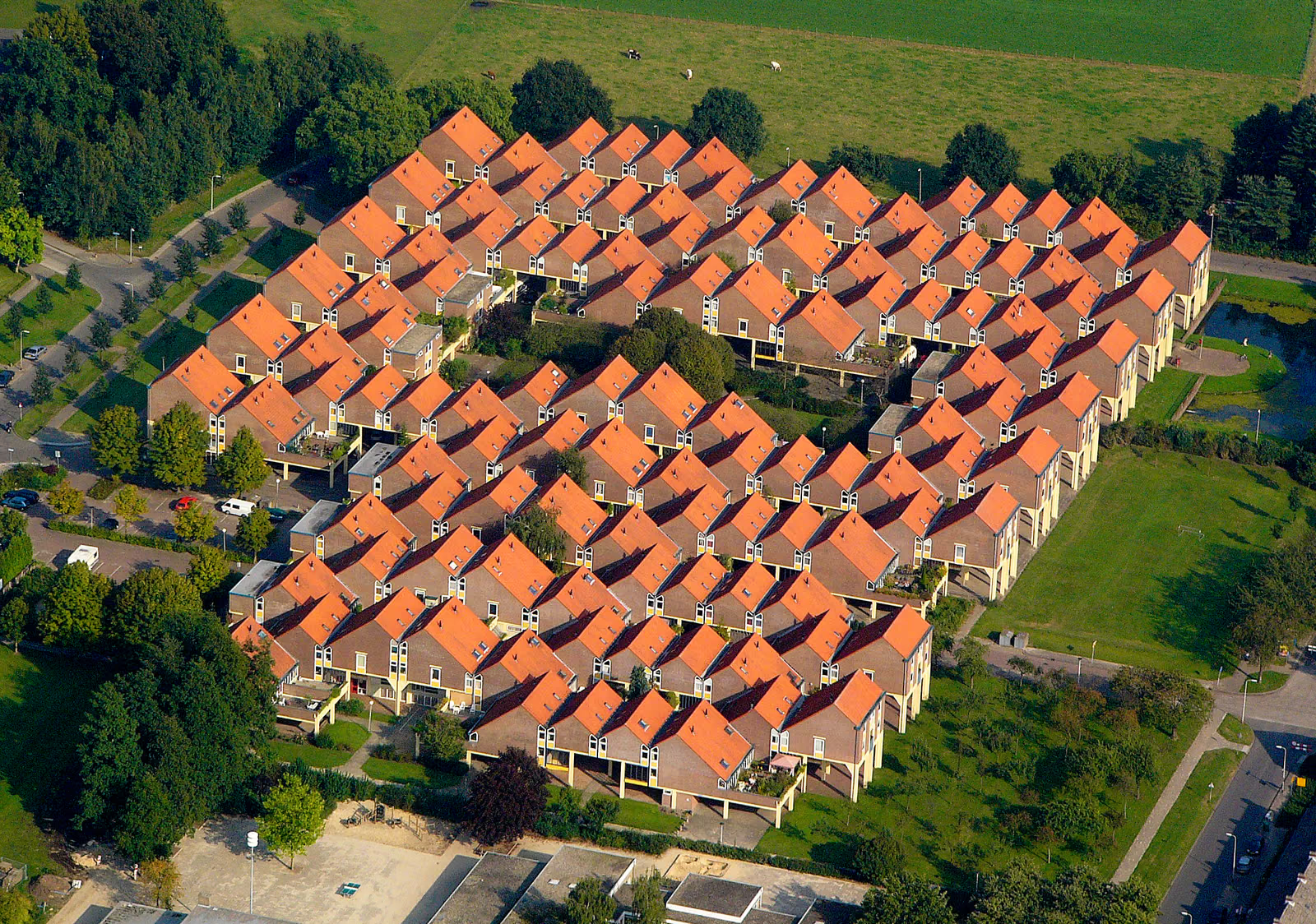
Blom's idea was simple and total: if the houses go up on legs, the ground stays whole. At Hengelo he ran 184 dwellings across a raised deck as a dense low mat, threaded by narrow alleys and roof terraces, and left everything below it as one continuous undercroft for cars, sheds, bicycles and planting. He called the principle "living as a general urban roof", and the name Kasbah advertises the model — the packed medina street, not the tower in the park that Dutch reconstruction planning had been building for two decades. It is a Structuralist argument about density made without a single high-rise. The scheme has been criticised ever since for the gloom of the undercroft and for how hard it is to find your own front door; it has also never emptied out, and after fifty years of continuous tenancy it was added to the national monument register in 2025.
Wikidata Q2547897 · Commons: File:De Kasbah, Hengelo (6921528471).jpg · Photo: Archangel12 · Licence: CC BY 2.0