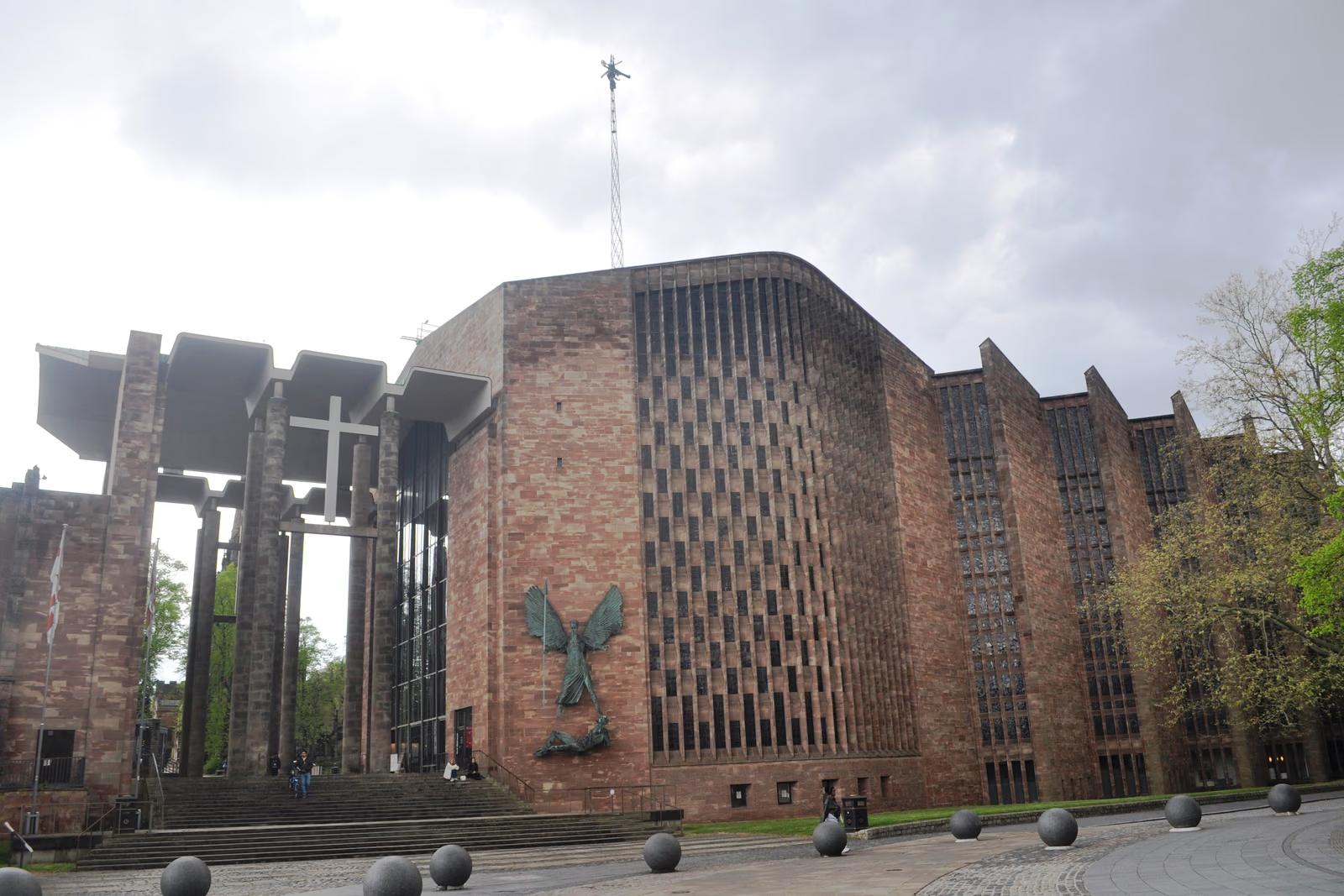
St Michael's was destroyed on the night of 14 November 1940, and Provost Howard had 'Father Forgive' cut into the wall behind the ruined altar. The decision to build rather than restore produced a competition in 1950 that drew more than two hundred entries; Spence won it by proposing that the ruin be kept and the new cathedral set at right angles beside it, joined by a porch, so that the old church stays visible through the glass of the new. He used Hollington sandstone for both to bind them together. The nave walls zig-zag, hiding their windows from anyone entering and showing them all on the walk back to the door; the Great West Screen is a wall of glass engraved by John Hutton with saints and angels. Spence commissioned the art as part of the architecture — Graham Sutherland's twenty-three-metre tapestry, John Piper's baptistry window made with Patrick Reyntiens, Jacob Epstein's bronze St Michael outside. The cathedral was consecrated on 25 May 1962, with Britten's War Requiem written for the occasion.
The medieval cathedral of St Michael was destroyed by Luftwaffe incendiaries during the Coventry Blitz of 14 November 1940, a raid that killed hundreds of civilians and levelled much of the city centre; only the tower, spire and outer walls survived. Within days Provost Richard Howard had the words 'Father Forgive' inscribed behind the ruined sanctuary, and the new cathedral was conceived from the outset around a ministry of reconciliation, expressed institutionally through the Community of the Cross of Nails and post-war links with Germany. The ruins are separately listed at Grade I and are maintained as a garden of remembrance rather than rebuilt.
Wikidata Q1138070 · Commons: Cathedral of St Michael (Coventry Cathedral), Priory Street, Coventry (NHLE Code 1342941) (April 2025) (3).jpg · Photo: Hassocks5489 · Licence: CC0