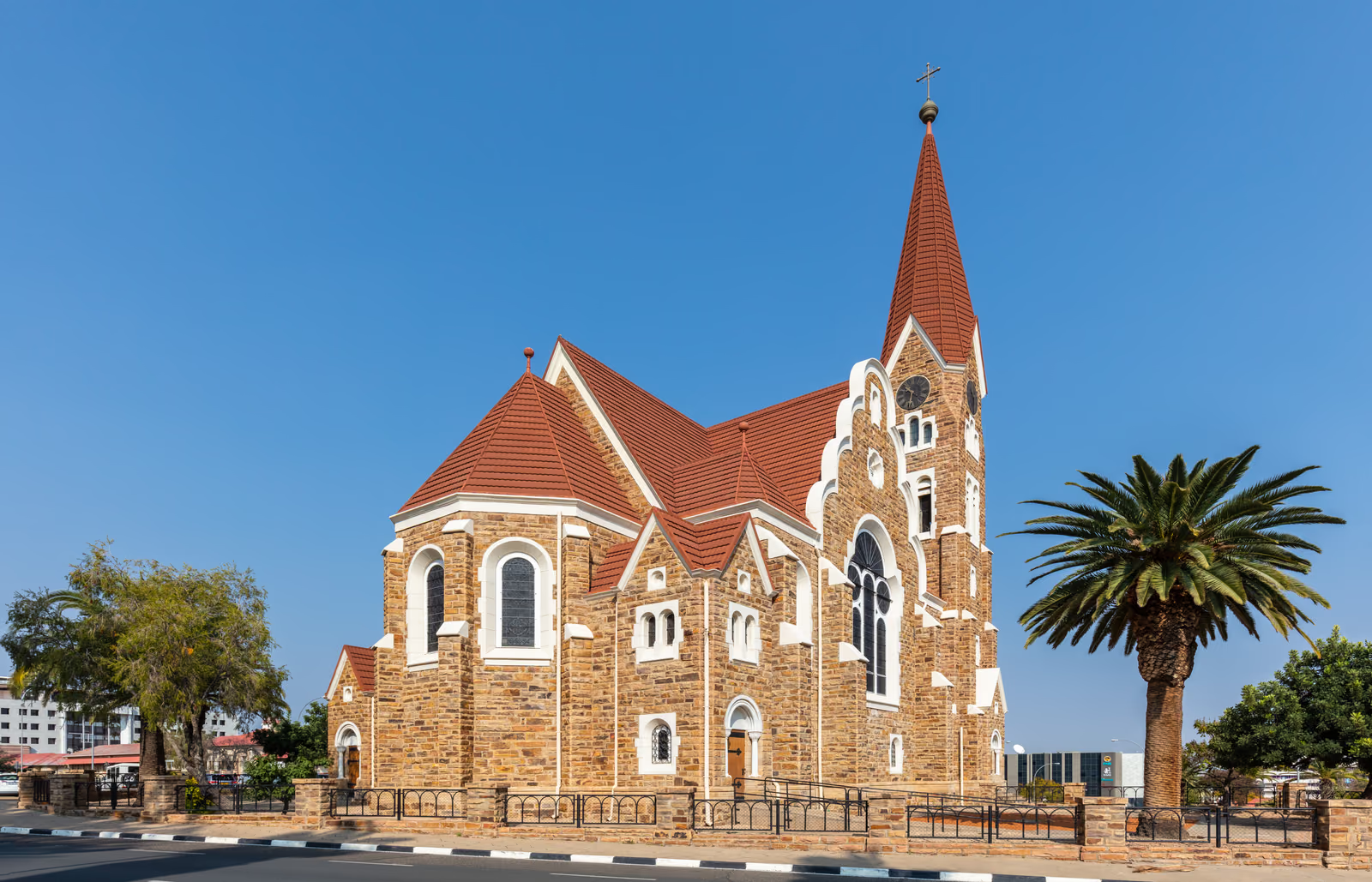
Gottlieb Redecker drew Christ Church three times before the imperial government approved the third version, then supervised the building himself. It went up between 1907 and 1910 in quartz sandstone quarried near the Avis Dam, on a basilican plan, in a neo-Romanesque idiom loosened by Jugendstil detail and touched here and there by Gothic Revival — a mixture that reads less as indecision than as a colonial architect working from memory and pattern books six thousand kilometres from the sources. The portico is Carrara marble; the clock, part of the roof and three bronze bells cast by Franz Schilling came from Germany, and the stained glass was a gift from Wilhelm II. The spire is twenty-four metres. It was called the Church of Peace from the outset, a name given at the end of the German war against the Herero and Nama, and it stands on an island in the road opposite the Tintenpalast, which is also Redecker's.
The church was designed and built in the aftermath of the German colonial war against the Herero and Nama of 1904–1908, which the German government formally recognised as a genocide in 2021; tens of thousands died in the fighting, in the Omaheke desert and in the camps. The foundation stone was laid on 11 August 1907, while the war was still being prosecuted, and the building was dedicated on 16 October 1910 under the name Church of Peace. It stands directly opposite the Tintenpalast, built as the headquarters of the German colonial administration and now the seat of the parliament of independent Namibia.
Wikidata Q1087458 · Commons: File:Iglesia de Cristo, Windhoek, Namibia, 2018-08-04, DD 02.jpg · Photo: Diego Delso · Licence: CC BY-SA 4.0