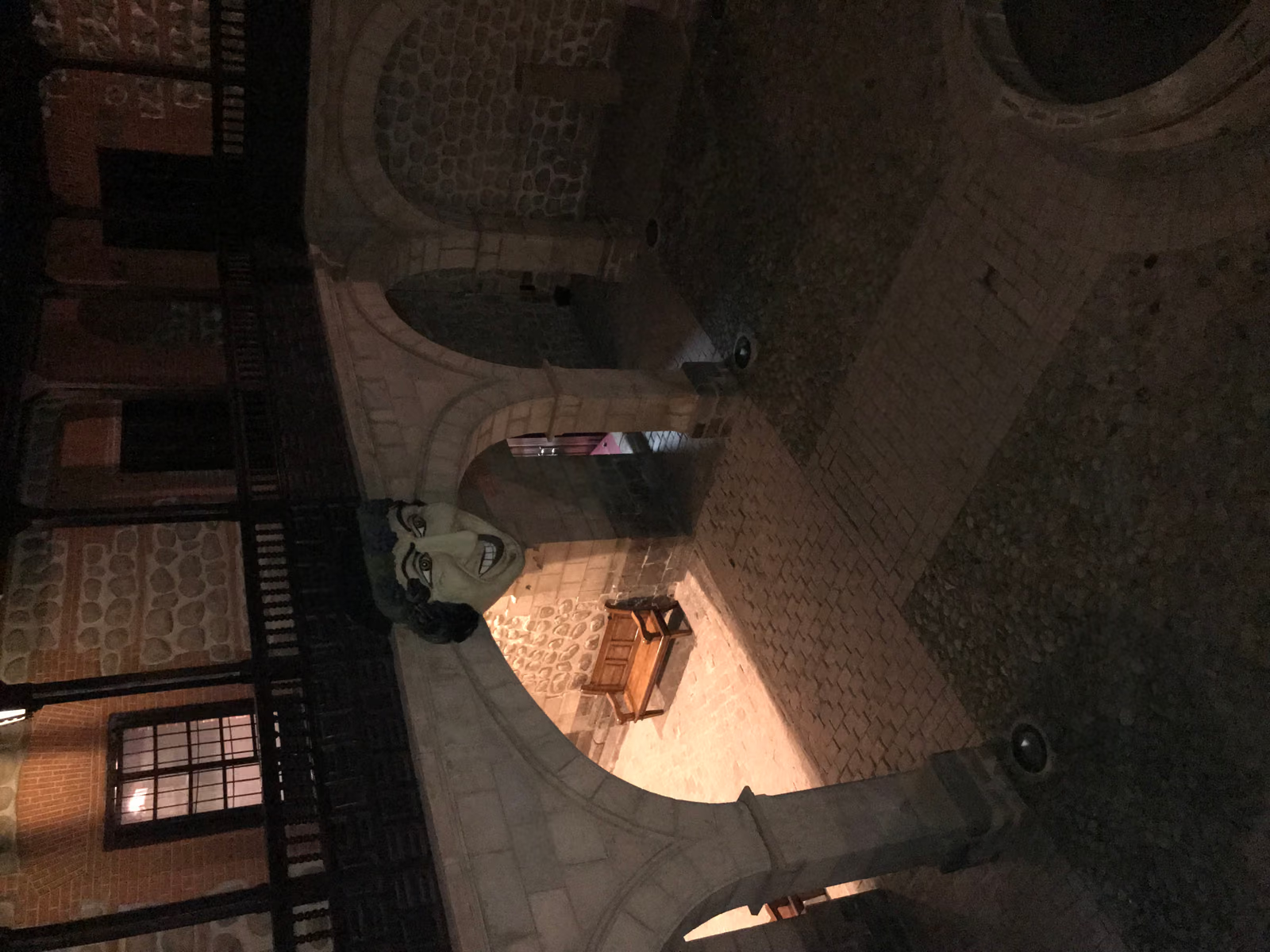
Local officials in Potosí, led by governor Ventura Santelices y Venero, wanted simply to enlarge the sixteenth-century mint that already stood on the site; Madrid overruled them, and Salvador de Villa arrived from a career spent building mints in Mexico City and Lima to start again from the foundations. Work ran from 1759 to 1773 across a single block of 7,570 square metres, producing roughly 15,000 square metres of building arranged around five courtyards and some two hundred rooms in dressed stone, river cobble and fine brick — a scale meant to match the wealth the Cerro Rico had poured through Potosí for two centuries. Villa died on site on 21 January 1764, four years into construction; his pupil Luis Cabello carried the work forward before handing it to Jaime San Just in 1765. The finished mint cost 1,148,452 pesos. It anchors the historic centre of Potosí, inscribed by UNESCO as a World Heritage Site in 1987, and today houses the numismatic and colonial-art collections of the Casa Nacional de Moneda museum.
Wikidata Q847038 · Commons: Casa Nacional de la Moneda, Potosí.jpg · Photo: Azulazul5 · Licence: CC BY-SA 4.0