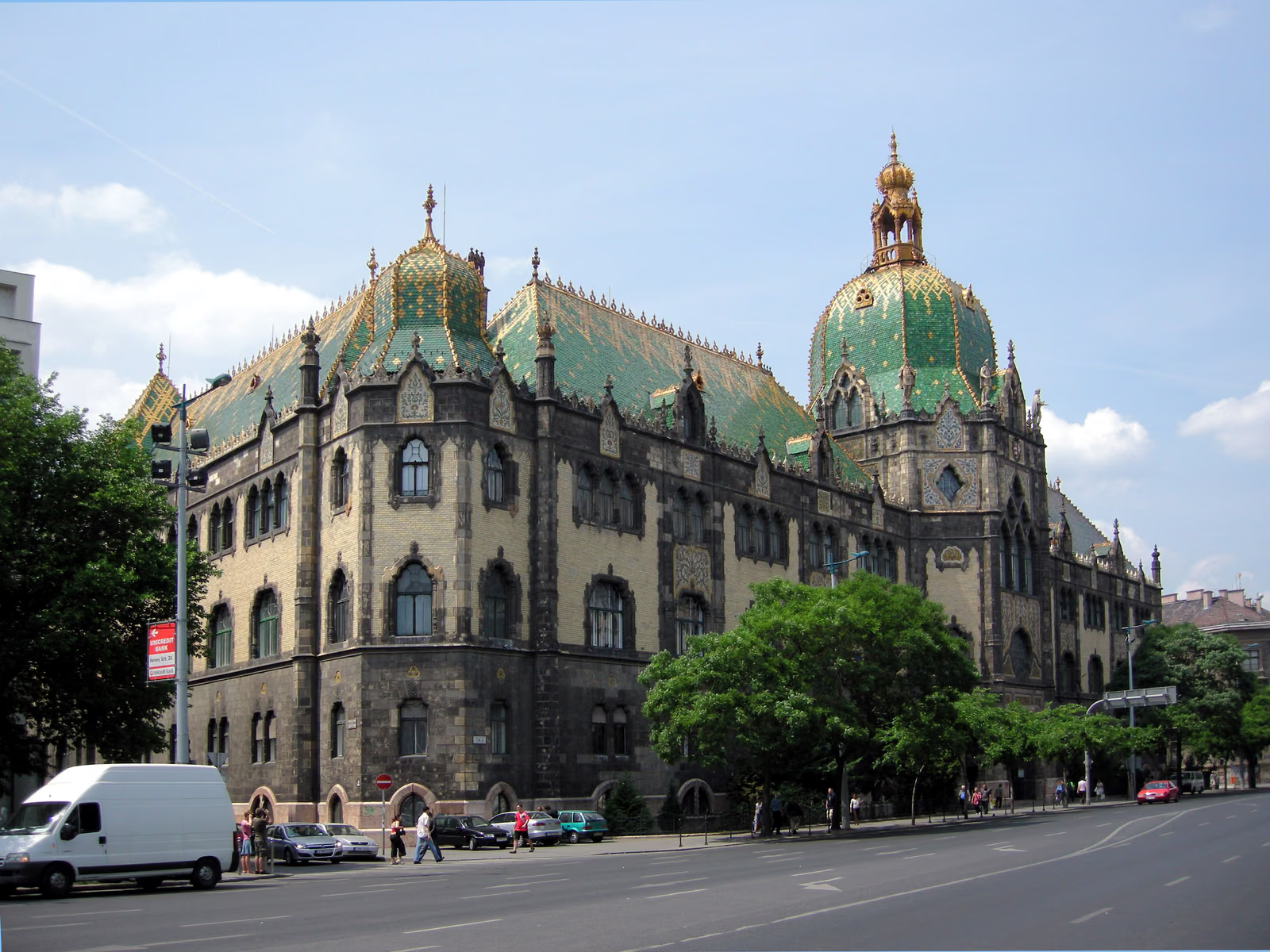
The third applied-arts museum in the world after London and Vienna, and the building in which Lechner first got his argument fully built. He and Gyula Pártos won the commission and worked from 1893 to 1896, finishing in time for the millennial celebrations of the Magyar conquest. The exterior is a brick box carrying an unbroken sheet of Zsolnay pyrogranite: a frost-proof glazed stoneware developed at Pécs, which let Lechner run green and gold across the roof and pull the dome up into a bulb of gilded ceramic. The ornament is not Hungarian folk art transcribed but a synthesis he assembled from embroidery motifs and from Indian and Persian sources, following a then-current belief that Magyar pattern shared an eastern ancestry. Inside, the sequence reverses: a white, top-lit central hall with pointed arcades and an iron-framed glass vault, closer to a Victorian exhibition shed than to anything on the facade.
Wikidata Q1088467 · Commons: File:Museum of Applied Arts. Main facade from south. BudapestDSCN3639.jpg · Photo: Yoav Dothan · Licence: PD