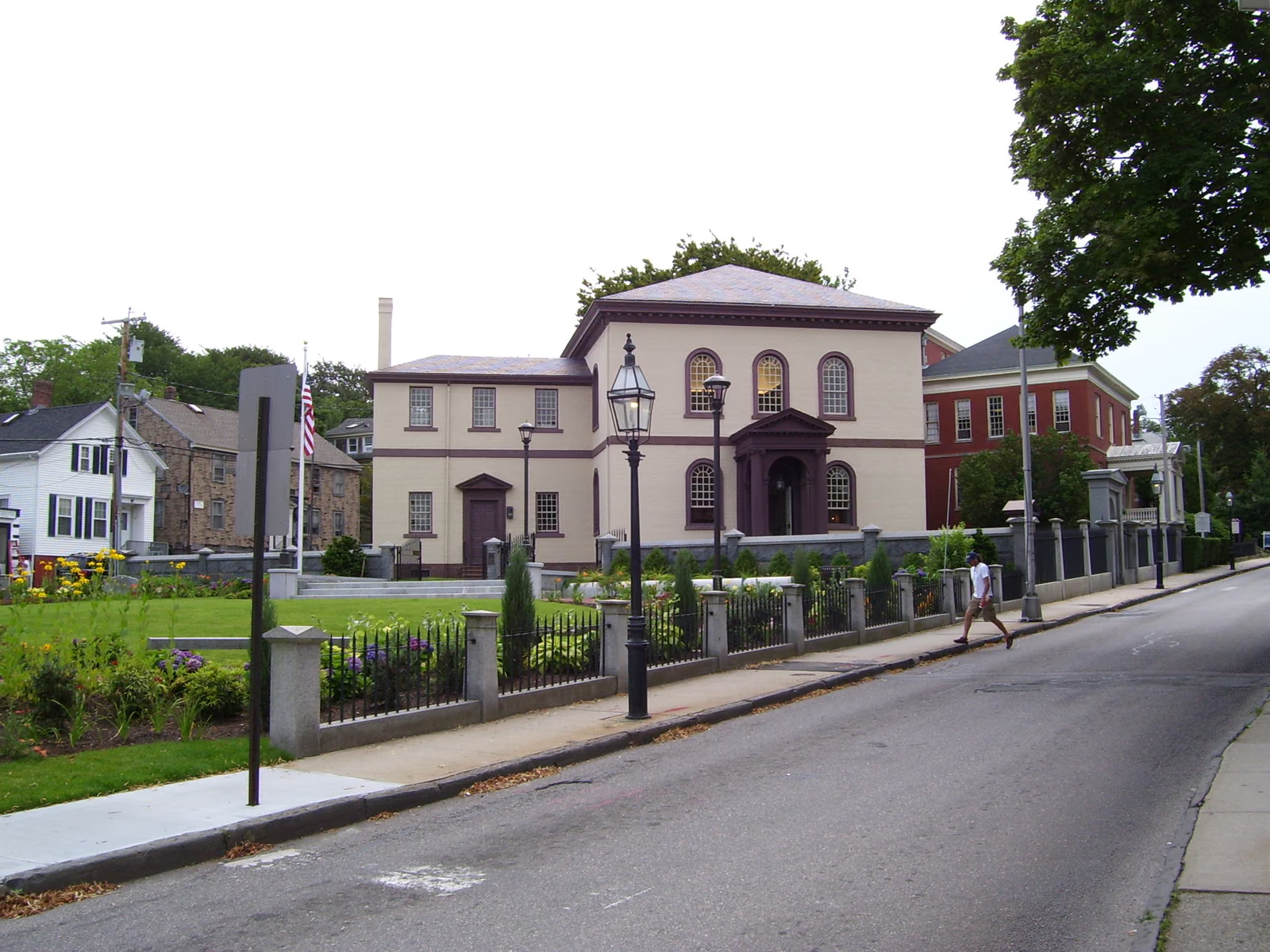
Harrison went to sea as a young man, commanding merchant ships out of Newport, and picked up architecture the way an educated 18th-century amateur could: from pattern books by Palladio, Gibbs and Kent, assembled into a library he kept adding to for the rest of his life. He never trained formally and never called himself an architect in any document that survives; contemporaries described him as a gentleman who designed as a courtesy to his city. Between 1748 and 1763 he gave Newport four buildings that still stand — the Redwood Library, King's Chapel in Boston, Touro Synagogue and the Brick Market — each copied close to an English or European precedent but built in wood and brick rather than stone. He held Loyalist sympathies during the Revolution; after his death in New Haven in 1775, a mob burned his house, his library and every drawing he had made.