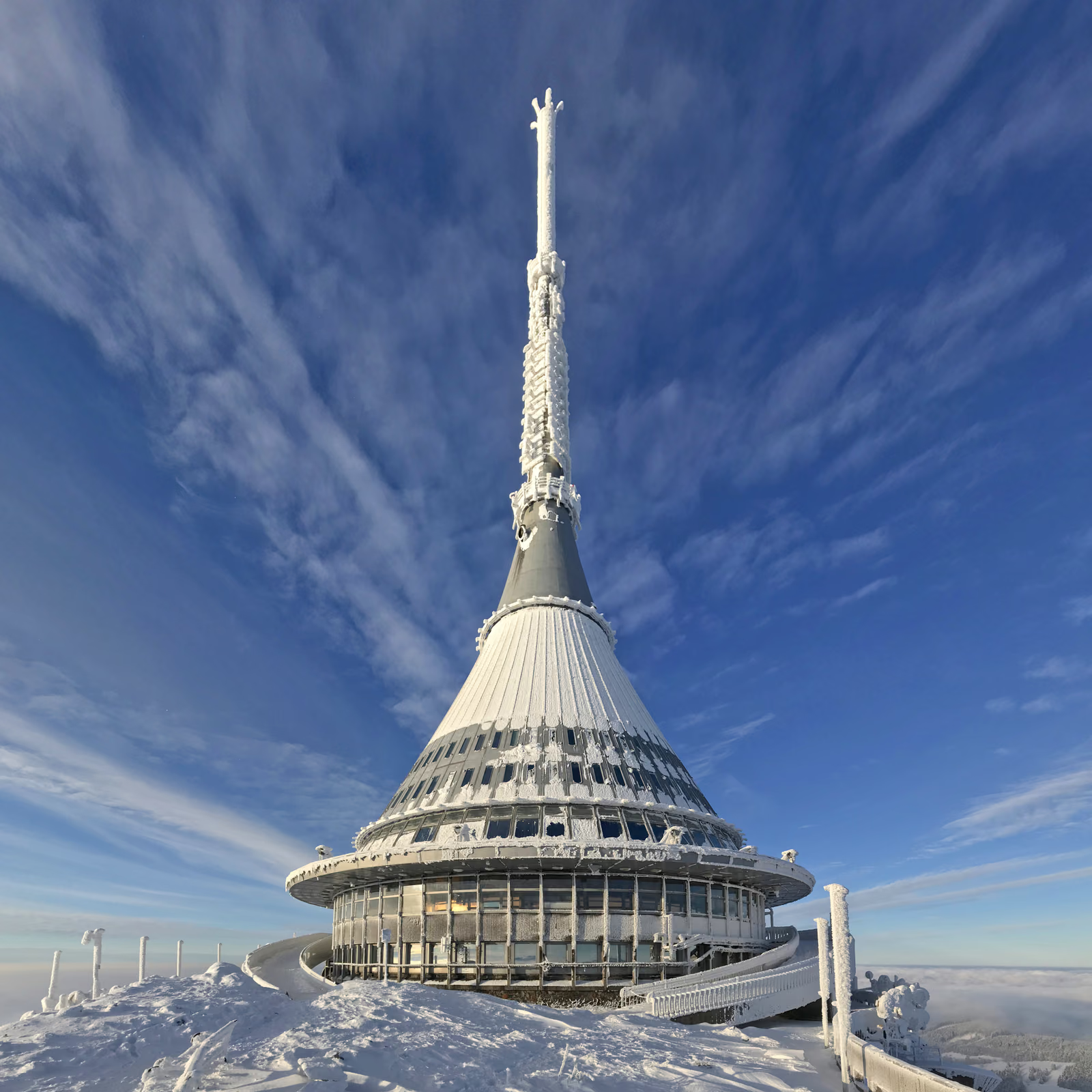
Hubáček spent his working life in Liberec rather than Prague, and in 1968 turned the state design office he led into SIAL, briefly one of the few semi-independent architectural practices in Czechoslovakia. He worked by starting from the engineering. His method was to find a structural idea specific enough that the plan, the profile and the cladding all followed from it, then hold the client to it: at Ještěd the hyperboloid does the work of silhouette, wind resistance and antenna mast at once. The International Union of Architects gave him its Auguste Perret Prize in 1969, the first to a Czechoslovak architect. Normalisation broke SIAL up in 1971 and much of his later output was housing and civic work in North Bohemia. In 2000 Czech architects voted Ještěd the country's finest twentieth-century building.