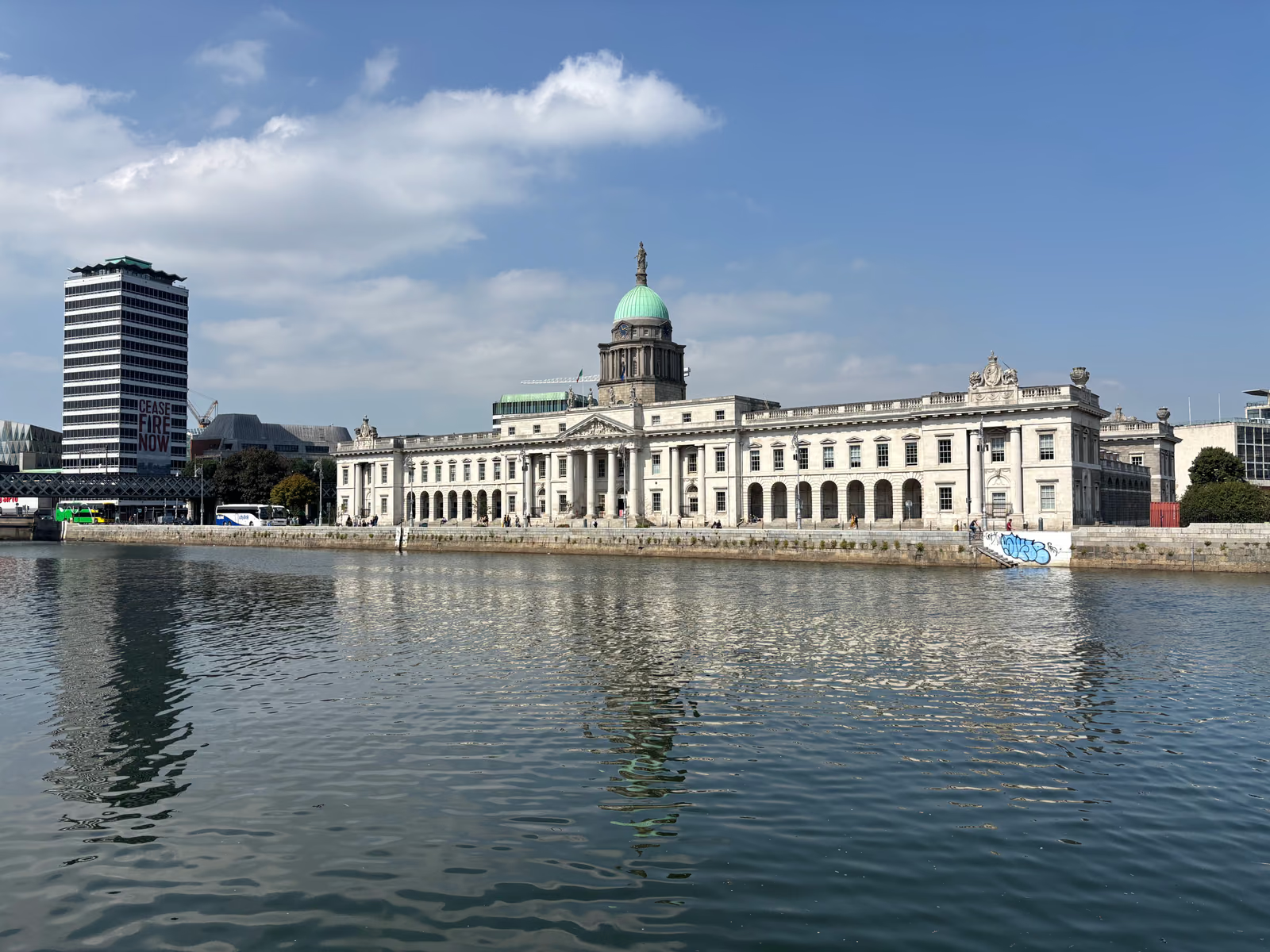
James Gandon was a Londoner who made Dublin. Trained in William Chambers's office and formed by the sober Roman neoclassicism of his generation, he was invited to Ireland in 1781 by John Beresford, the first revenue commissioner, who wanted a new Custom House downriver of the old city. Friends advised against it; Gandon went, and stayed for the rest of his life. Over three decades he gave Georgian Dublin its civic set pieces — the Custom House, the Four Courts, the King's Inns, and the east portico added to the Parliament House on College Green. Each is a long, low composition in ashlar, organised around a dome or a columned centrepiece and calculated to be read at distance across water or open ground. He worked with Irish masons and carvers, above all the sculptor Edward Smyth, whose riverine keystone heads are now inseparable from Gandon's façades.