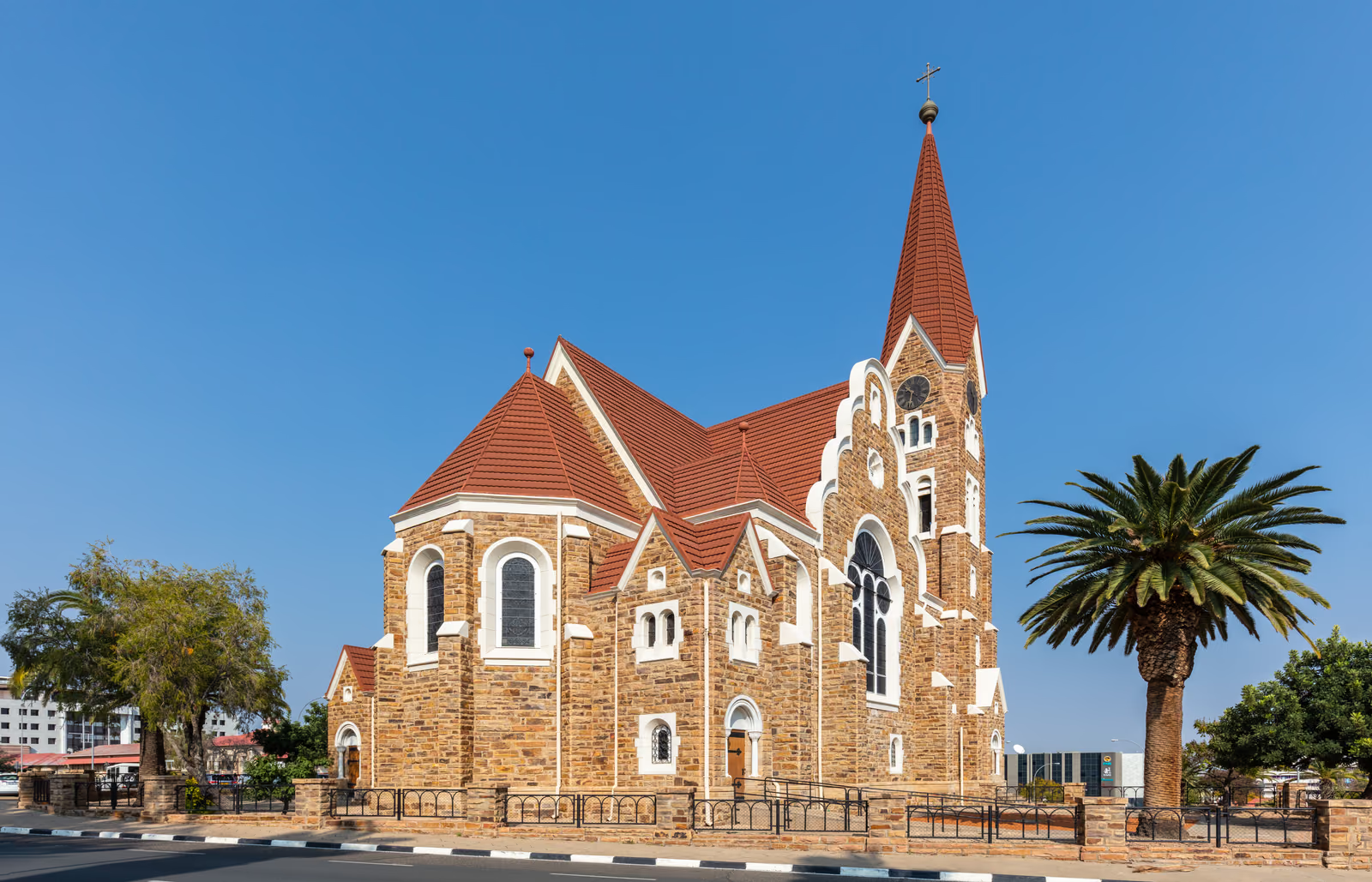
Gottlieb Wilhelm Eduard Redecker was born in 1871 at Otjimbingwe, then the effective capital of German South West Africa, the eldest of seven children of a Rhenish missionary family from Westphalia. He was among the first pupils of the Augustineum school, spoke Herero and Damara fluently, and — having lost through long absence the German citizenship inherited from his father — was for a period classified as a Damara by the colonial administration. He trained as an engineer in Germany, returned, and in 1901 was appointed director of engineering by the imperial government, becoming in effect the territory’s first architect. The two buildings that fix Windhoek in the mind are his: the Christuskirche of 1907–10, neo-Romanesque with Jugendstil detail, and the Tintenpalast of 1912–13, still the seat of Namibia’s parliament. He died in Germany in 1945.